

Vascular Surgery AI Shows Promise in the Lab But Stumbles at the Bedside
A comprehensive review reveals that while artificial intelligence achieves up to 97% accuracy in controlled vascular surgery settings, a critical validation gap leaves most models years away from routine clinical use.
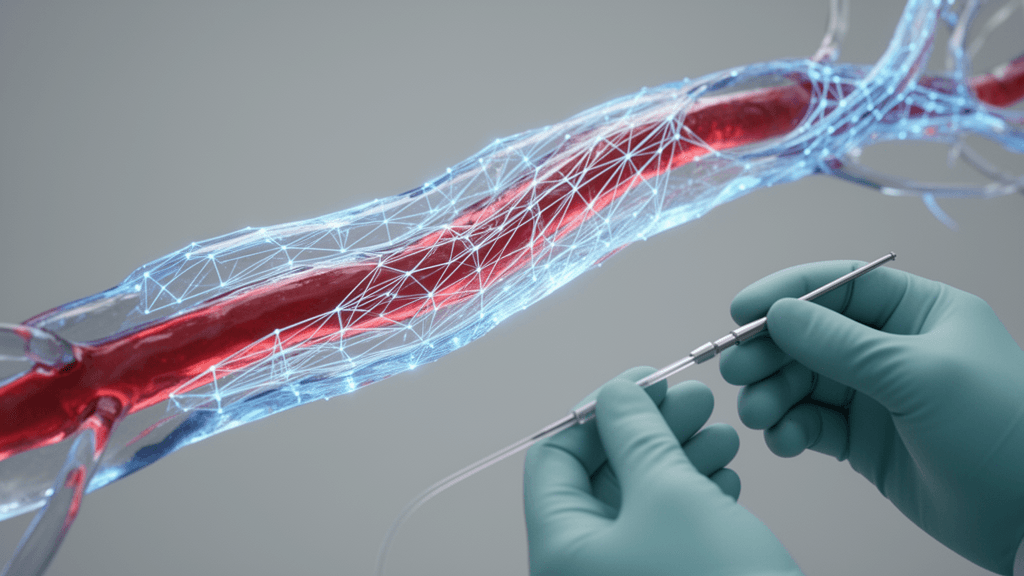
Artificial intelligence is making impressive technical strides in vascular surgery—from predicting post-operative complications with near-perfect accuracy to autonomously navigating catheters through complex arterial networks—yet a sobering reality check suggests the technology remains largely confined to research labs and pilot studies. According to a narrative review published in Frontiers in Cardiovascular Medicine analyzing 30 primary studies, the field faces a critical "valley of death" between proof-of-concept and clinical trust, with fewer than 5% of machine learning studies conducting external validation and most autonomous robotic systems still awaiting real-world safety trials.
The stakes are considerable: peripheral artery disease alone affected approximately 316.5 million people globally in 2023 and carries a threefold increase in cardiovascular mortality risk. AI tools promise to improve outcomes across the entire vascular surgery pathway, but regulatory uncertainty, sparse prospective testing, and transparency gaps are delaying adoption.
Machine Learning Excels at Prediction—In Theory
The performance metrics are striking. Machine learning models analyzing the Vascular Quality Initiative registry achieved an AUROC of 0.94 and accuracy of 0.85–0.87 for predicting major adverse limb events or death one year after endovascular surgery, according to work by Ben Li and colleagues. Separate analyses using the American College of Surgeons NSQIP database reached AUROCs of 0.86–0.97 for 30-day outcomes including reintervention, amputation, and readmission after endovascular aortoiliac revascularization.
Deep learning imaging models have proven equally capable in controlled settings. A 3D U-Net pipeline trained on 395 CT scans and tested on 70 independent scans reached a mean Dice score of 0.95 for thoracic aneurysm repair planning, while semantic U-Net segmentation achieved pixel-wise accuracy of 0.97 for flagging unsafe landing zones during endovascular aneurysm repair.
Natural language processing has also shown promise: a Mayo Clinic rule-based algorithm achieved a positive predictive value of 0.98 and accuracy of 0.97 for diagnosing abdominal aortic aneurysms from radiology reports in prospective validation, while Duke University's PAD-ML model reached an AUROC of 0.89 for peripheral artery disease diagnosis from electronic health records.
The Validation Crisis Holding Back Adoption
Despite these impressive numbers, the review exposes a troubling pattern: only 9 of 212 machine learning studies (4.2%) conducted external validation, and 94.8% showed high overall risk of bias. The regulatory landscape compounds the problem—of 521 FDA-authorized medical AI devices, 226 lacked publicly available clinical validation data, and only 17 of 130 FDA-approved device evaluations reported performance across demographic subgroups.
Robotic systems illustrate both the potential and the gap. The CorPath 200, the first endovascular robotic platform launched in 2010, achieved 100% technical and clinical success in a prospective trial of robot-assisted femoropopliteal angioplasty—but the trial included just 20 patients. Experimental systems using deep reinforcement learning have reached 95–96% success rates in simulated vascular navigation tasks, yet these remain preclinical. A voice-controlled large language model interface with a robotic C-arm X-ray system achieved 97% satisfactory action execution across 212 prompts in phantom settings, suggesting potential utility for reducing radiation exposure and procedure times, but human trials are still pending.
What This Means for Vascular Care
For healthcare providers, the message is clear: vascular AI tools show strong performance in controlled settings but lack the external validation and prospective evidence needed for confident clinical integration. Surgeons and interventional radiologists at academic centers may encounter AI-assisted risk stratification or robotic catheter systems, but due diligence and local validation remain essential before deployment.
Health technology companies face a critical commercialization bottleneck—regulatory clearance does not equal market readiness. Developers must prioritize external validation, prospective trials, and transparent subgroup performance reporting to build clinical trust.
For the 316.5 million patients worldwide living with peripheral artery disease, AI augmentation is not yet standard of care. While minimally invasive procedures offer shorter recovery times, most AI tools remain investigational, with clinical viability likely years away pending safety trials and the resolution of liability frameworks for autonomous systems.
The vascular surgery AI field has achieved proof-of-concept across prediction, imaging, and robotics—but bridging the gap between technical success and bedside implementation will require a fundamental shift toward rigorous validation and transparency.
Sources
Google Search
Follow Health AI Central on Google
Choose Health AI Central as a preferred source, and Google is more likely to show our reporting in Top Stories.
Reporting & accountability
How we maintain accuracy
Health AI Central separates reported facts, analysis, and public-source data. Readers can review our standards, request a correction, or consult the relevant research methodology before relying on a claim.