

VA Admits It Bought Oracle's $17 Billion EHR Knowing It Violated Disability Access Laws
Department of Veterans Affairs Secretary confirms the agency knowingly acquired a non-compliant electronic health record system, as patient safety concerns persist and contract costs balloon 70% above original estimates.
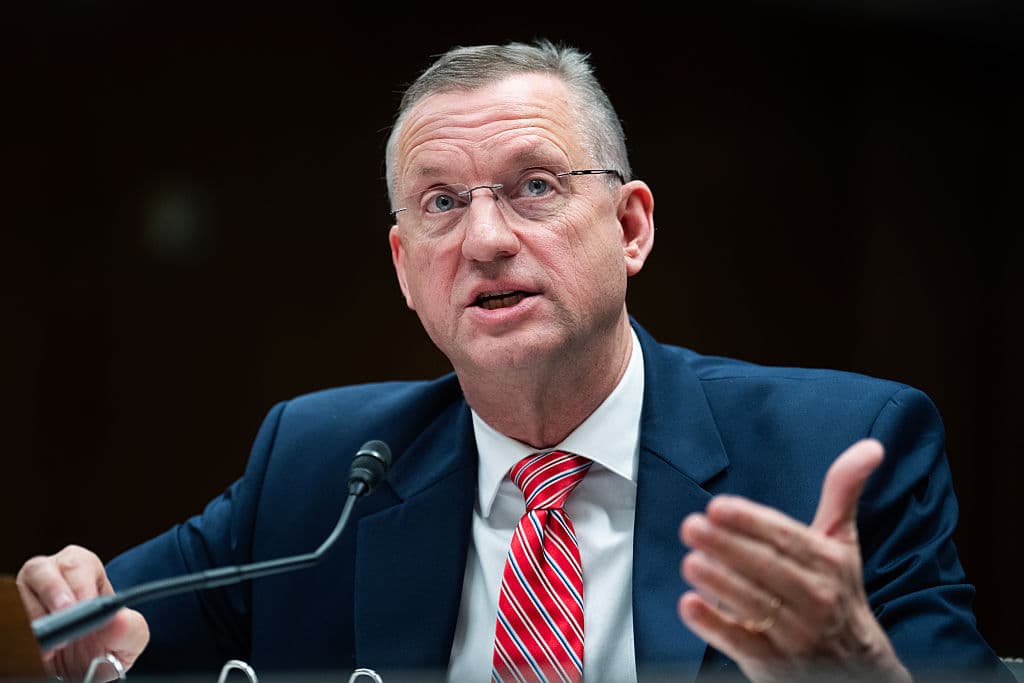
The Department of Veterans Affairs knowingly purchased an electronic health record system that violated federal accessibility requirements for people with disabilities, VA Secretary Doug Collins has confirmed in a letter to Congress. The admission adds fuel to an ongoing lawsuit and raises questions about federal procurement standards as the contract's cost ceiling has ballooned to nearly $17 billion from an original $10 billion.
Procurement Decisions Under Legal Scrutiny
In correspondence to House Veterans' Affairs Committee ranking member Mark Takano (D-Calif.), Secretary Collins acknowledged that "VA was aware at the time of acquisition that the commercial electronic health record product was not fully compliant with Section 508"—the federal law requiring government technology to be accessible to people with disabilities.
The revelation comes amid a 2024 lawsuit alleging the EHR system, originally contracted with Cerner in 2018 and now operated by Oracle Health, remains inaccessible to disabled veterans. Senior Judge John Bates of the U.S. District Court for the District of Columbia ruled in July 2025 that "procuring a noncompliant EHR and then rolling it out despite the continued noncompliance—which [the plaintiff] alleges VA did—were VA's own choices." A settlement conference is scheduled for December 18, 2025.
Collins defended the procurement decision by citing the need for interoperability with the Department of Defense system to ensure continuity of care for transitioning service members. However, the system was not compatible with screen-reader software at the time of contract signing.
Patient Safety Concerns Remain Elevated
Beyond accessibility issues, the EHR implementation has raised persistent patient safety concerns. The Nurses Organization of Veterans Affairs (NOVA) reported in September that patient safety event reporting "peaks at three times the baseline and remains elevated up to 1.7 times the baseline through 24 months, with no return to the pre-Oracle-Cerner baseline."
The sustained elevation in safety reporting 24 months post-implementation suggests ongoing operational challenges that extend well beyond typical adjustment periods for new health IT systems. While the VA has not publicly characterized these elevated reports as indicating actual patient harm, the metrics contrast sharply with expectations for mature EHR deployments.
Remediation Plans and Congressional Oversight
The VA maintains that migration to Oracle Cloud Infrastructure "will pave the way for implementing Oracle Health's complete redesign of the Oracle Electronic Health Record user interfaces, which are being built from the ground-up to be fully 508-accessible." However, this ground-up redesign approach suggests full compliance remains years away for a system already deployed across multiple VA facilities.
Oracle Chairman and CTO Larry Ellison has been subpoenaed to testify before the House Veterans' Affairs Committee on December 10, 2025, as congressional oversight intensifies. The hearing comes as the contract ceiling has increased nearly 70% from its original value.
Collins also addressed data privacy concerns, confirming that "The contract prohibits Oracle Health from using Veteran data to develop or benefit its commercial products," with no evidence of violations found to date.
The case establishes a significant precedent for federal healthcare IT procurement, demonstrating that interoperability objectives and "best meets" exceptions cannot indefinitely shield agencies from statutory accessibility obligations—particularly when the cost and timeline for remediation continue to expand.
Sources
Companies in this article

Follow Health AI Central
Keep up with health AI where you already read
On LinkedIn
The day’s strongest health AI stories in your feed, one or two each weekday.
On Google
Choose Health AI Central as a preferred source, and Google is more likely to show our reporting in Top Stories.
Reporting & accountability
How we maintain accuracy
Health AI Central separates reported facts, analysis, and public-source data. Readers can review our standards, request a correction, or consult the relevant research methodology before relying on a claim.