

Three Chinese AI Founders Are Rewriting the Rules of the Global AI Race With Open-Weight Models
DeepSeek, Zhipu AI, and Moonshot AI are challenging US dominance by prioritizing foundational research over commercialization, releasing cost-efficient models that could democratize healthcare AI applications.
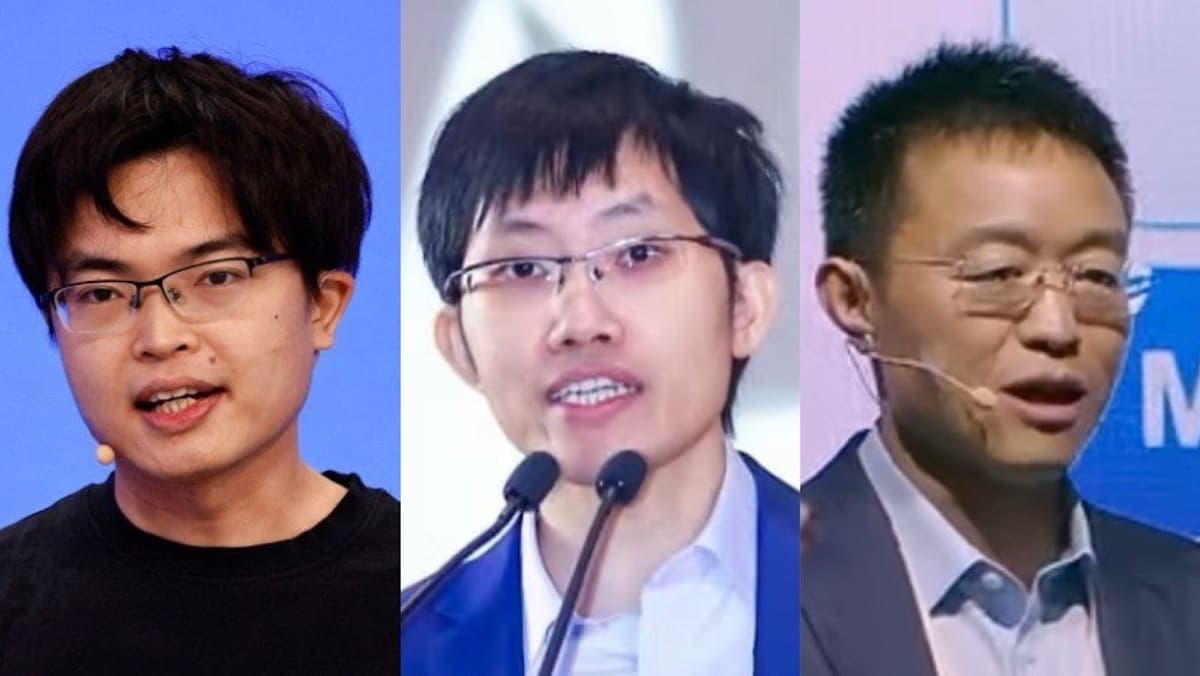
The global artificial intelligence landscape is experiencing a seismic shift as three Chinese companies—DeepSeek, Zhipu AI, and Moonshot AI—emerge as formidable competitors to US tech giants. Led by founders who prioritize foundational research over immediate profits, these firms are releasing open-weight AI models that rival American alternatives at a fraction of the cost, potentially transforming access to advanced AI capabilities for healthcare organizations and smaller technology developers.
The Visionaries Behind China's AI Surge
Liang Wenfeng, founder of DeepSeek, has become the world's richest AI model creator with a net worth of $37.9 billion. Initially bankrolled by profits from his High-Flyer hedge fund, Liang invested in over 10,000 Nvidia chips before US sanctions tightened. His company released the R1 model in January 2025 and the V4 model in April 2025, both featuring drastically reduced operational costs. DeepSeek recently raised $7.4 billion in its first external funding round, signaling investor confidence in its approach.
Tang Jie, co-founder of Zhipu AI and a Tsinghua University professor, previously led the development of Wu Dao, China's first superscale natural-language AI model in 2021. His company, founded in 2019, released the GLM-5.2 model and set an ambitious goal in an internal memo: reaching artificial general intelligence within two years. To achieve this, Tang deliberately slowed short-term app monetization efforts, focusing instead on foundational breakthroughs.
Yang Zhilin founded Moonshot AI in 2023 and launched Kimi K3 in July 2025—now the world's largest open-weight AI model. Despite having only approximately 300 team members, Moonshot has raised over $5.5 billion in total funding with a $30 billion valuation as of June. The company's rapid growth was evident when it temporarily paused new subscriptions just two days after Kimi K3's launch due to GPU capacity constraints.
A Strategic Bet on Open Access and Low Costs
According to Lin William Cong from Nanyang Technological University, these Chinese AI labs represent a "deliberate correction" from commercialization focus to foundational research. The open-weight, low-price strategy is a "bet that fastest route to AGI and large market runs through making technology cheap enough for whole ecosystem to experiment," Cong explained.
This approach positions China as a technology contributor rather than merely a beneficiary, with all three companies releasing core model components publicly. For healthcare AI developers, these open-weight models present cost-effective alternatives for building clinical applications, potentially reducing infrastructure expenses for natural language processing tasks such as clinical documentation, patient communication, and literature review.
Implications for Healthcare Innovation
The emergence of these affordable, powerful AI models could democratize access to large language model capabilities for smaller health tech companies and academic medical centers that cannot afford proprietary US models. However, healthcare organizations must carefully evaluate data governance, regulatory compliance with HIPAA and FDA requirements, model validation for clinical accuracy, and geopolitical considerations before deploying Chinese AI infrastructure in patient care settings.
While the research-first approach may yield rapid model improvements, healthcare leaders should note that these models may offer less enterprise support and clinical validation compared to established US vendors—a critical consideration for applications where accuracy and reliability are paramount.
Sources
Google Search
Follow Health AI Central on Google
Choose Health AI Central as a preferred source, and Google is more likely to show our reporting in Top Stories.
Reporting & accountability
How we maintain accuracy
Health AI Central separates reported facts, analysis, and public-source data. Readers can review our standards, request a correction, or consult the relevant research methodology before relying on a claim.