

Simplified AI Model Matches Complex Algorithms in Predicting Pediatric Asthma ED Readmissions
A 12-variable machine learning model performed comparably to an 18-variable version in identifying which children will return to the emergency department within 30 days, offering a more practical approach to clinical risk prediction.
When it comes to predicting which pediatric asthma patients will end up back in the emergency department, less may actually be more. Researchers at the University of Cincinnati have demonstrated that a simplified machine learning model using just 12 variables showed no statistically significant difference in performance compared to a comprehensive 18-variable version—a finding that could make AI-powered clinical decision support more practical for busy emergency departments.
Comparing Eight Approaches to Predict Readmissions
Dr. Rina Lee, who recently completed her allergy and immunology fellowship at the University of Cincinnati, led the study analyzing 69,749 asthma-related ED encounters from 31,779 pediatric patients at a quaternary pediatric center. The research, presented at the American College of Allergy, Asthma & Immunology Annual Scientific Meeting in Phoenix, compared four statistical models and four machine learning algorithms.
Among the patients studied, 1,759 (5.54%) returned to the ED with an asthma-related visit within 30 days. The comprehensive model incorporated 18 predictors including patient demographics, medication patterns, clinical factors, and environmental variables such as pollen count, mold count, humidity, and barometric pressure. The simplified version retained just 12 predictors, eliminating some environmental factors while keeping patient characteristics, medications, clinical factors, flu season, temperature, and air quality index.
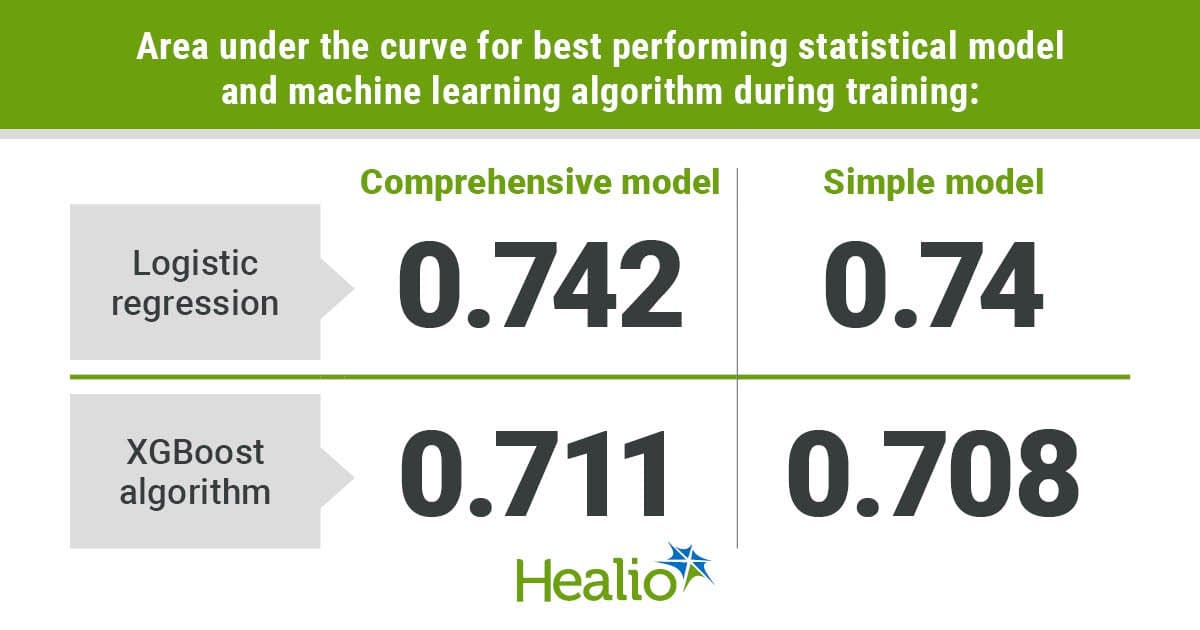
During testing, traditional logistic regression achieved the highest AUC among statistical models at 0.742 for the comprehensive model and 0.74 for the simple version. Among machine learning algorithms, XGBoost performed best with AUCs of 0.711 and 0.708 respectively. Critically, AUC values from the simple feature set were not significantly different from AUC values from the comprehensive feature set in any of the eight approaches tested.
One Medication Pattern Emerged as the Strongest Predictor
Across all eight models and algorithms, one factor consistently emerged as the most important predictor: whether patients were treated with albuterol alone versus albuterol plus other controller medications. This variable proved significant in every single model tested, suggesting that patients not receiving controller medications represent the highest-risk group for readmission.
Three other predictors appeared important in seven of eight models: first ED steroid use, atopic allergy, and age at encounter. Notably, race and sex were not counted as important predictors in any model or algorithm, indicating that clinical and treatment factors outweigh demographic characteristics in determining readmission risk.
Potential for Clinical Decision Support
The comparable performance of the simplified model offers practical advantages for emergency settings. Rather than requiring real-time integration of multiple environmental data streams, the 12-variable model relies primarily on information already captured during routine clinical care.
With moderate predictive accuracy (AUC 0.7-0.74), these models demonstrated performance comparable to or slightly better than AUCs reported in the literature for ED asthma admission rates for adults. According to Lee, "Our simple model has the potential to serve as a clinical decision support tool to predict ED readmission risks."
The identification of albuterol-only treatment as the strongest risk factor provides a clear target for clinical attention. Such prediction models could help emergency departments identify high-risk pediatric asthma patients at discharge, potentially informing decisions about follow-up care, medication management, and specialty care coordination.
Lee noted that "further work combining these models through ensemble methods may further improve prediction." The research was funded by a Community Grant from the Allergists' Foundation.
Sources
Follow Health AI Central
Keep up with health AI where you already read
On LinkedIn
The day’s strongest health AI stories in your feed, one or two each weekday.
On Google
Choose Health AI Central as a preferred source, and Google is more likely to show our reporting in Top Stories.
Reporting & accountability
How we maintain accuracy
Health AI Central separates reported facts, analysis, and public-source data. Readers can review our standards, request a correction, or consult the relevant research methodology before relying on a claim.