

Roche Bets on Generative AI to Design Drugs From Scratch, Slashing Discovery Timelines From Years to Months
Pharmaceutical giant partners with Chai Discovery to deploy foundation model that engineers novel protein therapeutics for previously undruggable targets.
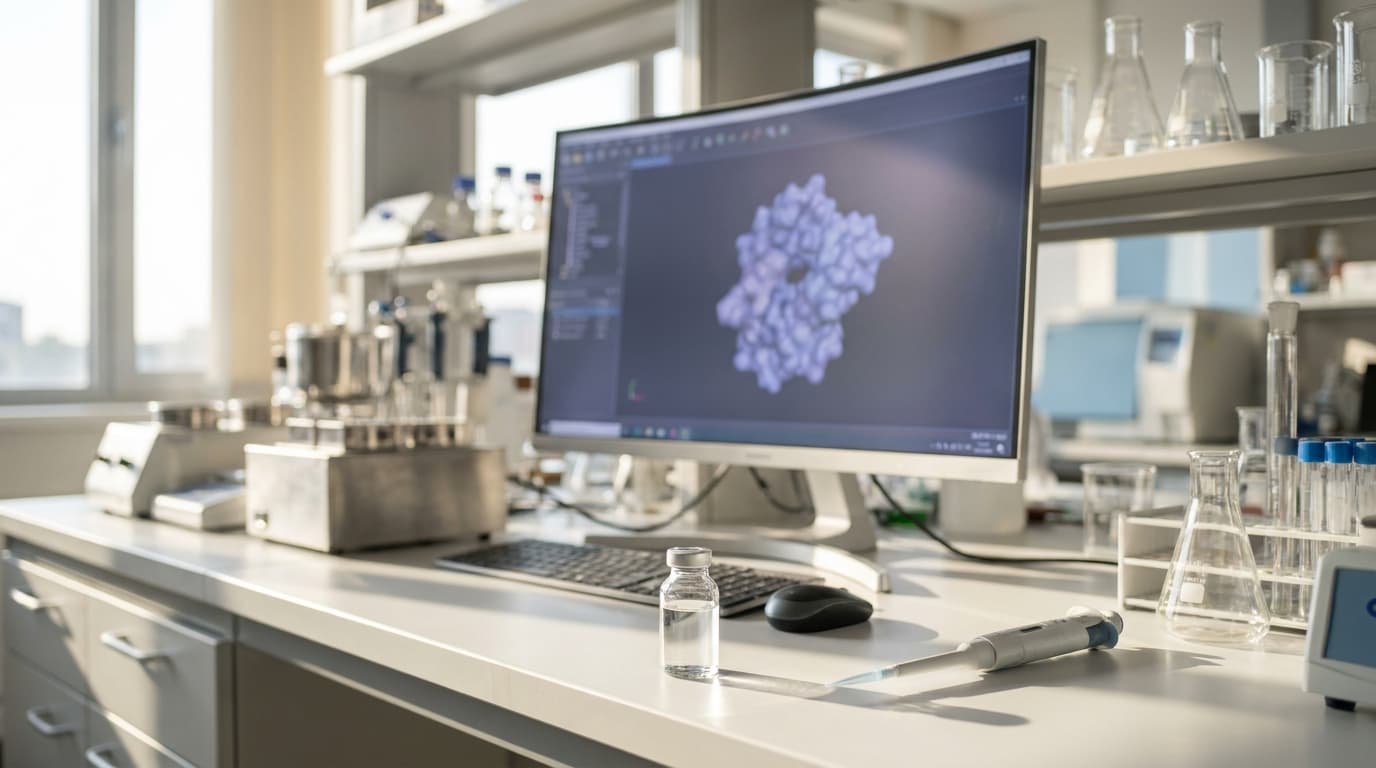
Illustration: AI-generated
Roche has entered an enterprise collaboration with Chai Discovery to integrate Chai-3, a generative AI foundation model, across multiple therapeutic discovery programs. The partnership marks a strategic shift from predictive protein folding to generative de novo molecular design, potentially compressing lead optimization timelines from years to months while expanding computational capabilities beyond traditional physics-based tools.
From Prediction to Creation: A New Paradigm in Drug Discovery
Chai Discovery is deploying its proprietary computer-aided design (CAD) suite for protein-based therapeutics into Roche's core research and early development pipelines. Unlike conventional AI models that predict existing protein structures, Chai-3 is engineered to generate novel molecular binders from scratch, optimized for high target success rates, structural prediction fidelity, and nanomolar-range binding affinities.
The multi-modal foundation model reasons over biological structure, chemical topology, and dynamic protein function to engineer therapeutic candidates. The system is particularly optimized for complex target geometries where conventional wet-lab structural assays struggle to identify druggable binding sites—potentially opening pathways to disease targets previously considered inaccessible.
Founded in 2024 by Joshua Meier, Jack Dent, Matthew McPartlon, and Jacques Boitreaud, Chai Discovery brings team experience from OpenAI, Meta FAIR, Stripe, and academic molecular design. The company has attracted backing from Index Ventures, Kleiner Perkins, Sequoia Capital, Dimension, Oak HC/FT, General Catalyst, OpenAI, Thrive Capital, and Menlo Ventures.
Implications for Drug Development
For pharmaceutical companies, the collaboration demonstrates a viable enterprise integration strategy for generative AI in drug discovery. Roche maintains its internal wet-lab infrastructure while outsourcing frontier model development to specialized AI labs, potentially reducing R&D overhead and accelerating therapeutic candidate identification for historically difficult-to-drug targets.
The partnership also establishes a commercial validation pathway requiring systematic calibration against proprietary wet-lab assay feedback loops from pharmaceutical partners. Algorithmic performance benchmarks alone appear insufficient for long-term sustainability without enterprise deployment and real-world validation data.
For patients, the technology offers potential acceleration of therapeutic development for complex disease targets. However, the clinical translation timeline from computational design to approved therapeutics remains a multi-year process requiring extensive preclinical and clinical validation.
The Roche-Chai Discovery collaboration signals the pharmaceutical industry's strategic pivot toward de novo therapeutic design, leveraging generative AI to tackle previously intractable drug discovery challenges. As the technology matures through real-world deployment, its impact on accelerating drug discovery timelines in complex disease areas will become clearer.
Sources
Companies in this article

Google Search
Follow Health AI Central on Google
Choose Health AI Central as a preferred source, and Google is more likely to show our reporting in Top Stories.
Reporting & accountability
How we maintain accuracy
Health AI Central separates reported facts, analysis, and public-source data. Readers can review our standards, request a correction, or consult the relevant research methodology before relying on a claim.