

Radical Numerics Delivers First AI-Designed Phage Therapy to Human Patient Under Compassionate Use
San Francisco biotech's proprietary AI model designed bacteriophage cocktail in days rather than months, marking clinical debut for AI-generated antimicrobial treatment.
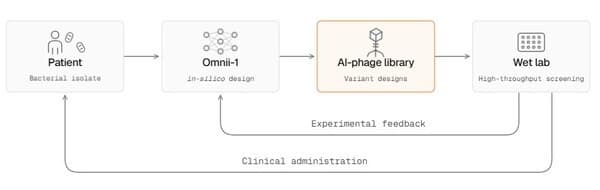
A San Francisco-based artificial intelligence company has administered the first AI-designed bacteriophage cocktail to a human patient, marking a significant milestone in the race to combat antibiotic-resistant infections with machine learning-powered therapeutics.
Radical Numerics delivered the treatment on October 22, 2024, under a compassionate-use protocol in the United States. The company's proprietary AI model, Omnii-1, designed the personalized phage therapy targeting an antibiotic-resistant bacterial infection, though specific details about the infection type remain undisclosed due to patient privacy considerations.
Accelerating Treatment Design from Months to Days
The AI-driven approach could dramatically compress the timeline for developing bacteriophage therapies. According to the company, Omnii-1 can reduce the phage design process from weeks or months to just a few days, though efficacy validation, production, and safety testing still require additional time beyond the initial design phase.
This speed advantage addresses a critical gap in treating multidrug-resistant infections, which pose particular risks for patients undergoing pneumonia treatment, sepsis management, surgical procedures, organ transplantation, and cancer therapy. The traditional drug development pathway typically spans approximately 10 years and costs exceed $2 billion, with only 10-12% of drugs entering Phase 1 clinical trials ultimately receiving approval.
Radical Numerics' clinical milestone follows joint research conducted by Stanford University and Arc Institute in 2025 on AI-accelerated phage design, suggesting growing momentum in the field.
Pharmaceutical Giants Betting on Bio-AI Partnerships
The first-in-human administration comes as major pharmaceutical companies pour resources into AI-driven drug discovery collaborations. Eli Lilly has partnered with Insilico Medicine, while AstraZeneca works with insitro on treatments for MASH and cardiomyopathy. Bayer has engaged Iambic for small-molecule drug discovery using the Enchant and NeuralPLexer platforms.
Novo Nordisk has established partnerships with both Anthropic and OpenAI, while OpenAI itself acquired Orchestra Bio to enhance drug development process management capabilities. These industry moves underscore the pharmaceutical sector's conviction that artificial intelligence can fundamentally reshape therapeutic development timelines and success rates.
Clinical Translation Milestone for Bio-AI
For healthcare providers, AI-designed bacteriophage therapy represents a potential rapid-response option for patients facing life-threatening infections where conventional antibiotics have failed. The compassionate-use pathway employed by Radical Numerics provides a regulatory mechanism for delivering experimental treatments to patients with serious conditions when no approved alternatives exist.
However, patient outcomes from this first administration remain undisclosed, and the approach currently operates outside standard approval pathways. The treatment represents a potential new avenue rather than an established therapy, with broader clinical validation still required to determine efficacy and safety across patient populations.
Radical Numerics' successful transition from laboratory development to clinical administration positions the company at the forefront of bio-AI translation, potentially establishing competitive advantages in the emerging personalized antimicrobial market as the antibiotic resistance crisis intensifies globally.
Sources
Companies in this article

Google Search
Follow Health AI Central on Google
Choose Health AI Central as a preferred source, and Google is more likely to show our reporting in Top Stories.
Reporting & accountability
How we maintain accuracy
Health AI Central separates reported facts, analysis, and public-source data. Readers can review our standards, request a correction, or consult the relevant research methodology before relying on a claim.