

OpenAI Launches GPT-6 Astra Ultrafast with 8x Speed Boost on NVIDIA Blackwell GPUs
New model variant leverages inference optimizations and NVIDIA's programmable GPU platform to accelerate agent workflows and interactive applications.
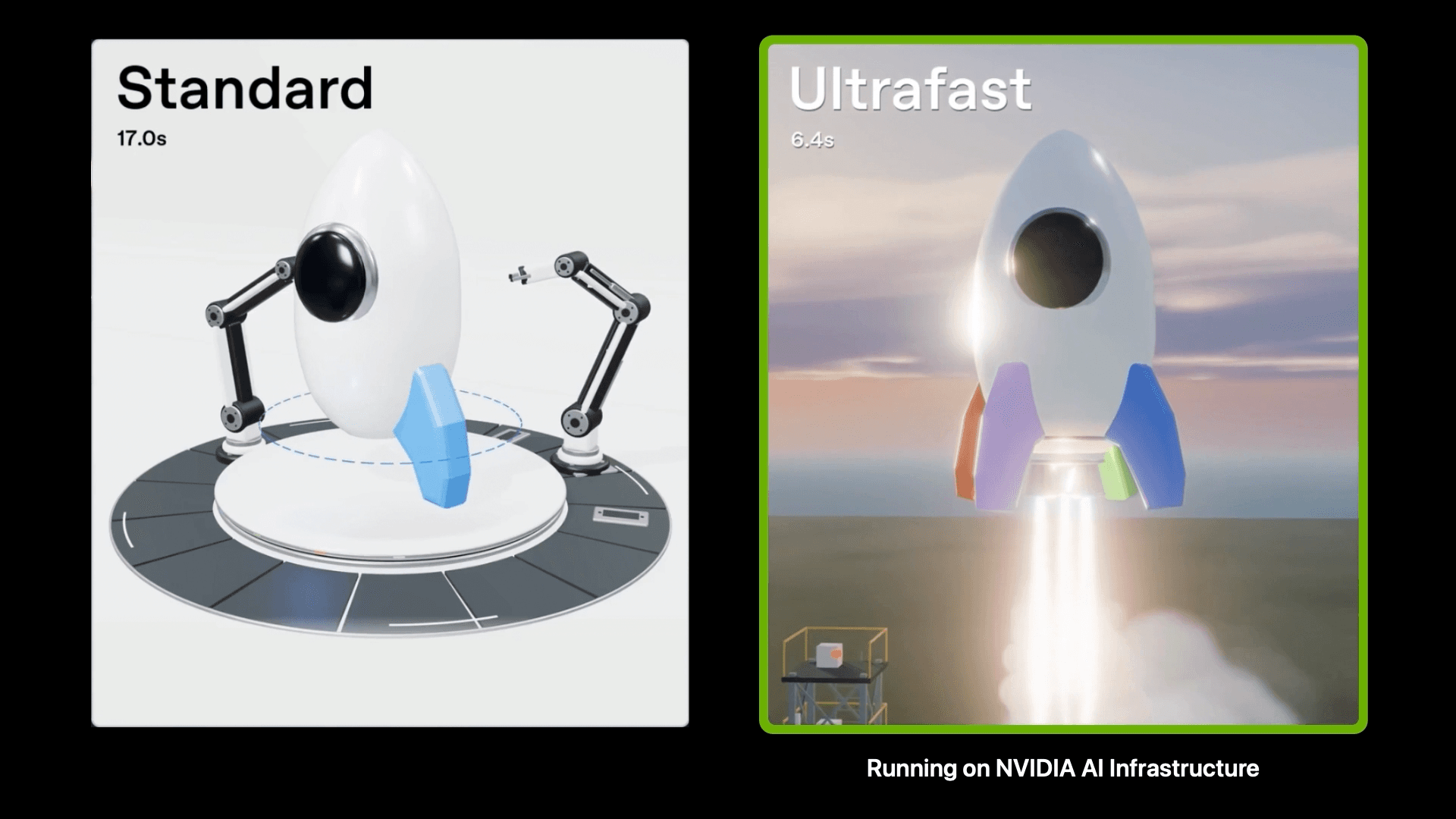
OpenAI has launched GPT-6 Astra Ultrafast, a new model variant optimized for NVIDIA's Blackwell GPU architecture that delivers up to 8x faster token generation compared to the standard Astra mode. The performance leap, achieved through inference optimizations that tap into the capabilities of NVIDIA's Blackwell architecture, is now accessible via the OpenAI API and to eligible ChatGPT Work and Codex users.
According to Dion Harris writing on the NVIDIA blog, the speed improvements enable developers to shorten coding agents' edit-test-debug cycles, reduce the time spent generating responses between tool calls, and make interactive applications feel more responsive.
Performance Gains in Agent Workflows
The accelerated token generation is particularly impactful in workflows where speed matters across repeated interactions. As Harris explains, "A faster response matters most when it's repeated across a workflow: an agent writes code, uses a tool, checks the result and decides what to do next." Ultrafast brings Astra's capabilities into these time-sensitive loops where agents write code, use tools, and work through complex tasks.
Philippe Tillet, inference lead at OpenAI, emphasized the role of NVIDIA's platform capabilities: "NVIDIA's deep investment in tooling and documentation has enabled us to make our models exceptionally good at programming Blackwell and Rubin GPUs. Astra can turn that knowledge into high-performance kernels that make NVIDIA hardware compelling across the full frontier of latency, throughput and cost."
Continuous Optimization Through Programmability
The performance gains extend beyond the initial deployment. OpenAI is using its own models to help refine the inference software running on NVIDIA GPUs, taking advantage of the platform's programmability to test and implement improvements. This ongoing optimization work can make model responses faster and deployed infrastructure more productive over time.
"Our work with NVIDIA is helping us make AI faster and more useful," said Uday Ruddarraju, chief technology officer of compute at OpenAI. "We used our internal models to optimize inference on NVIDIA GPUs, and NVIDIA's programmability helped us deliver the acceleration behind Astra Ultrafast."
Infrastructure Flexibility and Future Hardware
NVIDIA's programmable platform approach allows developers and researchers to reuse infrastructure across training, inference, and reinforcement learning as models evolve. This flexibility helps teams repurpose compute resources as demand changes, improving utilization and avoiding overprovisioning for each workload.
The documentation indicates that OpenAI is already programming for both current Blackwell GPUs and future Rubin hardware, suggesting ongoing optimization efforts that may deliver additional performance improvements as the hardware platform evolves.
Developers can access GPT-6 Astra Ultrafast through the OpenAI API today, with implementation details available in the Ultrafast guide.
Sources
Reporting & accountability
How we maintain accuracy
Health AI Central separates reported facts, analysis, and public-source data. Readers can review our standards, request a correction, or consult the relevant research methodology before relying on a claim.