

OpenAI Bets $250 Million That AI Can Revolutionize Medical Research—But Scientists Aren't Convinced
New program offers 100,000 researchers free ChatGPT access as mounting evidence reveals critical flaws in AI-generated scientific work.
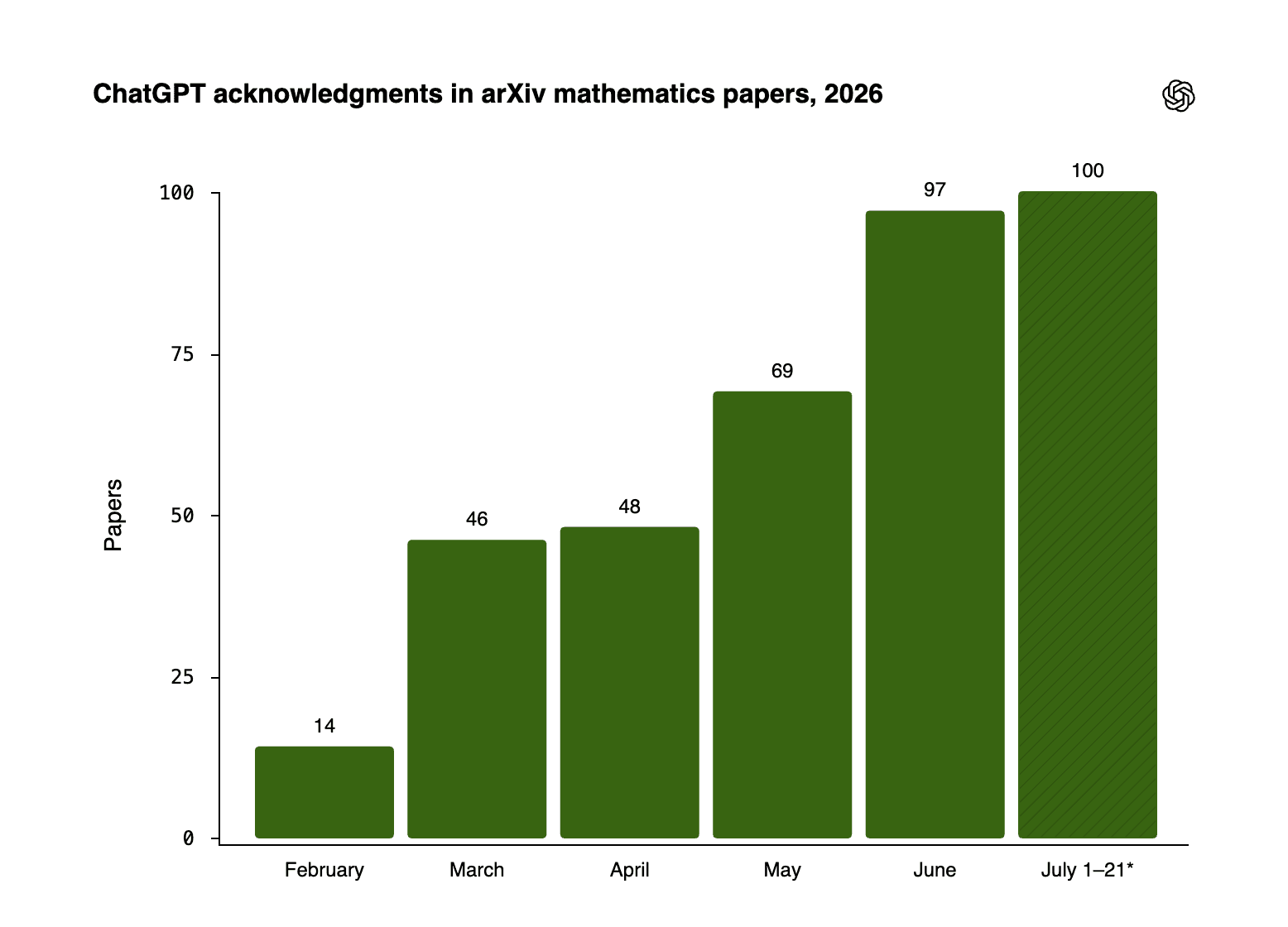
OpenAI has launched an ambitious initiative to embed artificial intelligence into scientific discovery, offering complimentary ChatGPT access to 100,000 academic researchers as part of a $250 million funding commitment through 2027. The ChatGPT for Academic Researchers program promises model access, specialized training, and hands-on support designed to accelerate breakthroughs across disciplines—including healthcare, where early applications have shown both remarkable promise and troubling limitations.
The timing of this expansion comes as the scientific community grapples with fundamental questions about AI's role in research integrity, with major publishers and preprint repositories implementing new safeguards against AI-generated content that fails basic quality standards.
Healthcare Applications Show Dramatic Speed Gains
Early adopters have demonstrated AI's potential to compress research timelines that traditionally span years into days or weeks. Researchers at Boston Children's Hospital deployed reasoning models to diagnose genetic diseases in children, while a drug discovery system called Robin—developed by FutureHouse—identified ripasudil, currently approved for glaucoma, as a candidate treatment for dry age-related macular degeneration. The finding was subsequently published in Nature, demonstrating AI's capacity to uncover novel therapeutic applications for existing medications.
Google's competing Gemini-based Co-Scientist platform achieved similar results, returning a top-ranked hypothesis in two days that matched work requiring years from an Imperial College London research team. These computational accelerations suggest AI could fundamentally reshape the economics and timelines of medical research.
Research Integrity Concerns Mount
Despite these successes, significant concerns about AI's impact on scientific rigor have emerged. Science journal published a January editorial warning that AI "could degrade reliability of the scientific literature," while arXiv—the dominant preprint repository—clarified that submissions showing unchecked model output or fabricated references would result in one-year bans.
A July 29 arXiv preprint provided empirical evidence for these concerns, testing frontier AI agents on unpublished NeurIPS submissions with six days and thousands of dollars in computational resources. Original researchers scored the resulting papers 2/6 and 1/6—clear rejections by peer review standards. The study identified five critical failure modes: poor judgment about publishable research standards, uncreative responses to design shortcomings, ineffective backtracking when approaches failed, poor resource awareness, and instruction drift.
These limitations suggest that while AI can accelerate certain computational tasks, it currently lacks the scientific judgment necessary for independent research design and execution.
Implications for Healthcare Innovation
For healthcare providers and medical researchers, OpenAI's program democratizes access to powerful computational tools that could accelerate diagnostic capabilities and drug discovery. However, the documented failure modes necessitate a hybrid model where clinicians maintain control over research questions, methodology validation, and clinical interpretation while using AI as a force multiplier for data analysis.
The $250 million commitment also signals intensifying competition in healthcare AI infrastructure, particularly between OpenAI and Google's Gemini platform. Health technology companies must balance acceleration potential against mounting scrutiny from publishers and regulatory bodies regarding AI-generated content quality.
For patients, compressed research timelines could bring novel treatments and diagnostic tools to clinical practice faster—but only if rigorous human expert validation remains the standard before clinical translation. The promise of AI-accelerated medical research remains substantial, but realizing that promise will require addressing fundamental questions about research integrity and quality control that the scientific community is only beginning to confront.
Sources
Reporting & accountability
How we maintain accuracy
Health AI Central separates reported facts, analysis, and public-source data. Readers can review our standards, request a correction, or consult the relevant research methodology before relying on a claim.