

Medical AI's Guardrails Take Shape as Physicians Confront 90% Hallucination Rates in Complex Cases
The American College of Physicians establishes ethical framework for clinical AI as evidence reveals dramatic accuracy gaps between simple queries and medical literature reviews.
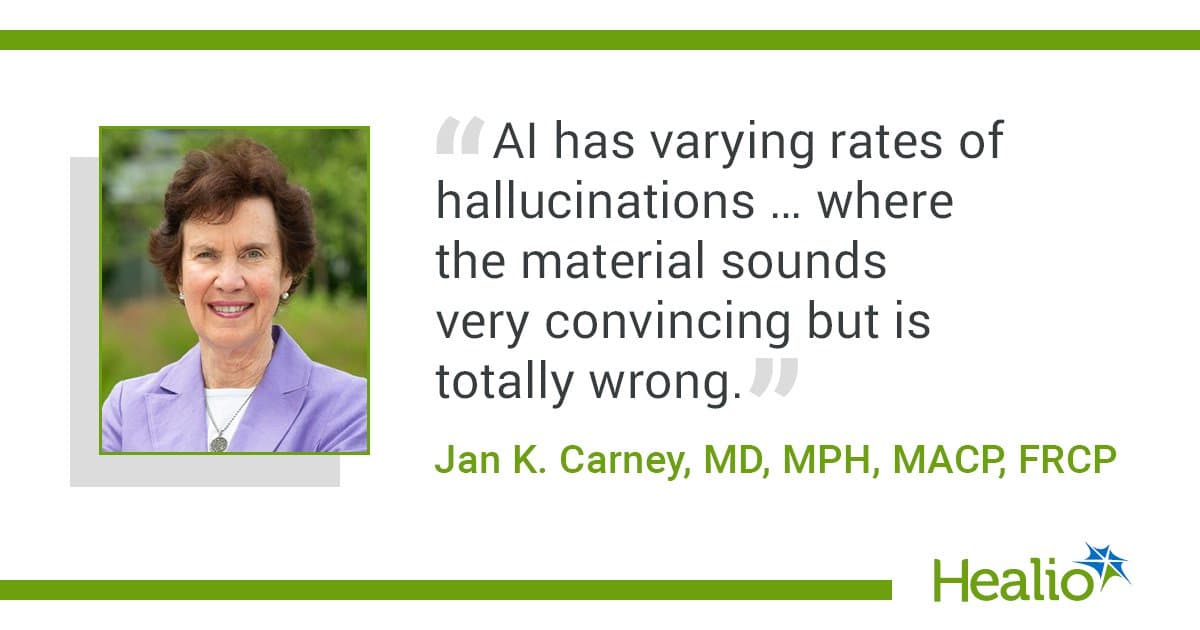
The American College of Physicians has drawn a line in the sand for artificial intelligence in clinical practice, releasing updated ethical guidance that reframes AI as "augmented intelligence" while confronting a sobering reality: hallucination rates in some AI systems exceed 90% when handling complex medical literature reviews.
The 2026 position paper, led by ACP President Jan K. Carney, MD, MPH, MACP, FRCP, builds on initial 2024 recommendations and arrives at a critical juncture for healthcare AI adoption. With over 200 AI guidelines already published in medical literature—yet no consensus on fundamental issues like privacy, disclosure, and equitable use—the ACP's framework attempts to establish clear ethical boundaries for a technology rapidly penetrating clinical workflows.
The Hallucination Problem and Prompt Literacy
The guidance confronts head-on what may be AI's most dangerous clinical limitation: the generation of plausible but false information. According to the ACP review, AI hallucination rates vary dramatically by task complexity—5% or lower for straightforward questions, but soaring above 90% for scientific queries or medical literature reviews in some studies.
To address this risk, the ACP emphasizes physicians must develop "prompt literacy" skills to minimize AI confabulation and avoid automation bias—the dangerous assumption that machine-generated outputs are inherently more accurate than human judgment. The framework requires verification of AI-generated references and mandates integration of AI responses with individual patient contexts rather than wholesale adoption of algorithmic recommendations.
Three Ethical Guideposts for Clinical AI
The updated guidance establishes three ethical principles to govern AI implementation: relationality, self-governance, and competence. Relationality focuses on preserving and supporting the patient-physician relationship. Self-governance protects the integrity of physician clinical judgment. Competence ensures AI applications align with expert medical knowledge.
These guideposts underpin four core position statements that emphasize AI as decision support rather than replacement, require physician education on AI capabilities and limitations, demand algorithmic bias mitigation, and prioritize preservation of the therapeutic relationship above technological efficiency.
Evidence Base and Implementation Requirements
Current evidence supporting clinical AI effectiveness remains narrow, according to the ACP review, with demonstrated accuracy primarily in diagnostic imaging applications like skin cancer detection and mammogram interpretation. This limited validation base contrasts sharply with the breadth of AI tools entering clinical practice.
The ACP framework creates concrete responsibilities across the healthcare ecosystem. Physicians must verify AI outputs and maintain clinical judgment primacy. Health systems must implement governance structures for AI oversight and create training programs addressing prompt literacy and risk mitigation. AI developers face expectations to design tools that demonstrably support rather than supplant clinical reasoning, incorporate bias detection features, and maintain transparency about limitations including hallucination rates.
The organization has developed an AI Resource Hub to support physicians navigating these requirements, recognizing that successful implementation demands both technical infrastructure and cultural change in how clinicians interact with algorithmic tools.
As healthcare AI moves from experimental to operational, the ACP's ethical framework represents organized medicine's attempt to shape technology deployment around professional values rather than vendor capabilities. Whether the three guideposts prove sufficient to prevent the "deskilling" of physicians while capturing AI's diagnostic benefits will depend on enforcement mechanisms and institutional commitment to the principles—challenges the position paper acknowledges but leaves largely unresolved.
Sources
Reporting & accountability
How we maintain accuracy
Health AI Central separates reported facts, analysis, and public-source data. Readers can review our standards, request a correction, or consult the relevant research methodology before relying on a claim.