

How Israel's Largest Health System Built an AI Safety Blueprint Now Endorsed by the WHO
As 65% of European nations deploy AI diagnostics with minimal oversight, the World Health Organization spotlights Clalit Health Services' 77-point governance framework as a model for closing the regulation gap.
The World Health Organization's Regional Office for Europe has identified a striking paradox in healthcare AI adoption: while 65% of countries in the WHO European Region now deploy artificial intelligence for diagnostics, only 8% have developed health-specific AI strategies or liability standards. In response to this governance vacuum, WHO has turned to an Israeli health system's comprehensive safety framework as a potential blueprint for responsible implementation.
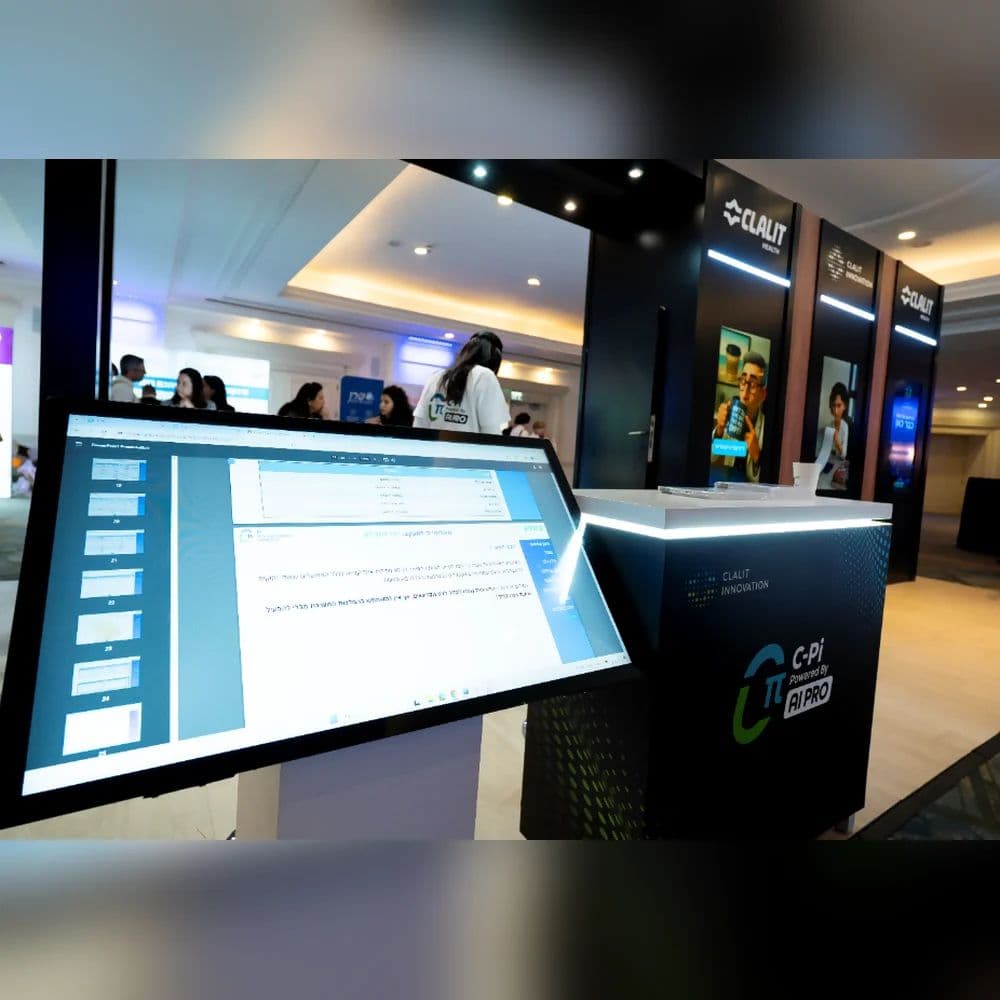
In a June 2025 report titled "Bridging Theory and Practice: Implementation Insights on Artificial Intelligence in Health Care," WHO featured Clalit Health Services' OPTICA framework as an exemplar of systematic AI governance. The framework offers a structured approach to evaluating medical AI systems across their entire lifecycle—from initial assessment through post-deployment monitoring.
A 77-Point Roadmap for AI Safety
Clalit's OPTICA framework comprises 77 checklist items organized across 13 sections, addressing critical dimensions including clinical suitability, organizational data readiness, algorithm development and performance, deployment protocols, and ongoing post-implementation surveillance. The framework, detailed in the peer-reviewed journal NEJM AI, represents an attempt to create replicable governance standards that can keep pace with rapid AI adoption.
According to Prof. Ran Balicer, Chief Innovation Officer and Head of Innovation Division at Clalit Health Services, the framework emerged from practical necessity as the health system deployed AI tools across its operations. The WHO report examines 11 case studies, with three originating from Israel and two involving Clalit directly.
One highlighted application—a predictive model for hepatitis C screening—demonstrated the framework's real-world impact. The AI-driven approach achieved a 100-fold improvement in screening efficiency, identifying 38 positive cases among 500 high-risk patients compared to 38 cases per 50,000 patients using traditional screening methods.
The Governance Gap
The WHO findings underscore the urgency of systematic AI oversight. Beyond the 65% of European countries deploying AI diagnostics without comprehensive strategies, the report reveals that 40% lack ethical guidance for healthcare AI applications. Meanwhile, 74% of European Union countries have adopted AI-assisted diagnostics, creating environments where clinical responsibility remains with physicians who may not fully understand the underlying technology.
Dr. Hans Henri P. Kluge, WHO Regional Director for Europe, has emphasized the need for frameworks that bridge the gap between AI's theoretical promise and practical implementation challenges. The OPTICA model addresses this by extending evaluation beyond initial algorithmic validation to encompass workflow integration, data suitability, and continuous monitoring capabilities.
Implications for Medical AI Development
WHO's endorsement of structured assessment frameworks signals a potential regulatory shift toward comprehensive evaluation standards. For medical AI companies, this suggests that demonstrating algorithmic performance alone may no longer suffice—vendors may increasingly need to show clinical appropriateness, organizational readiness, and post-deployment monitoring capacity.
The report also features Israeli medical AI company Aidoc, which develops multi-algorithm infrastructure for medical imaging. The inclusion positions comprehensive oversight frameworks as potentially more valuable than isolated point solutions as health systems prioritize governance-first approaches.
As healthcare AI deployment accelerates globally, the OPTICA framework represents an attempt to ensure that innovation and safety advance in tandem—a balance that WHO suggests the field urgently requires.
Sources
Companies in this article

Reporting & accountability
How we maintain accuracy
Health AI Central separates reported facts, analysis, and public-source data. Readers can review our standards, request a correction, or consult the relevant research methodology before relying on a claim.