

How a Cancer Testing Company Built a Higher-Margin Business Selling the Data It Collects
Tempus AI is converting clinical diagnostics into a lucrative data licensing operation, achieving 71% gross margins by partnering with pharmaceutical giants on AI-driven drug discovery.
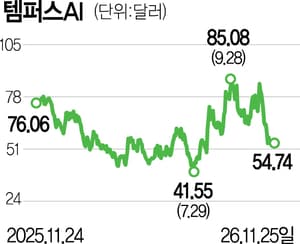
Tempus AI has cracked a code that many health tech companies aspire to: turning the data generated by its core clinical operations into a revenue stream more profitable than the services themselves. The precision medicine company, which performs genomic testing for cancer patients, is now monetizing that accumulated clinical data through pharmaceutical partnerships—and the margins tell a compelling story. While its diagnostics business operates at approximately 62% gross margins, its data and applications segment delivers 71%, according to a report from Seoul Economic Daily.
The company's data segment grew 33% year-over-year in the first nine months of 2024, reaching $288.24 million in revenue. Data licenses and AI model development services accounted for 86% of that growth, signaling a strategic pivot from volume-dependent testing toward a diversified precision medicine platform. Despite this momentum, diagnostics still represents 75% of total revenue, underscoring that Tempus remains fundamentally a testing company—but one with an increasingly valuable secondary business.
Pharmaceutical Partnerships Fuel Data Monetization
Tempus AI has secured contracts with several major pharmaceutical companies seeking access to real-world cancer patient data. In October 2024, Bristol Myers Squibb signed a five-year, $137.5 million agreement to use Tempus data for training proprietary AI models and identifying oncology drug targets. The deal exemplifies how pharma companies are willing to pay premium prices for longitudinal datasets that link genomic profiles to treatment histories and drug response outcomes.
MSD (Merck) expanded its collaboration with Tempus in March 2024, focusing on biomarker discovery. Earlier partnerships with AstraZeneca and Pathos, initiated in 2023, center on joint AI model development for cancer research. These arrangements position Tempus not merely as a data supplier but as a collaborative partner in drug development—a role that commands higher valuations and stickier customer relationships.
The company's cancer-related tests reached 101,500 in the third quarter of 2024, up 32% year-over-year. This testing volume serves dual purposes: generating diagnostic revenue while continuously feeding the data engine that powers pharmaceutical partnerships.
From Testing Lab to AI Drug Discovery Platform
Tempus AI's business model evolution illustrates a broader trend in healthcare technology: companies that control data generation infrastructure can extract more value than those relying on third-party data acquisition. By combining genomic data with treatment histories and outcomes, Tempus creates datasets that are difficult for competitors to replicate and increasingly valuable as AI applications in drug discovery mature.
For pharmaceutical partners, access to this real-world evidence promises more efficient target identification, biomarker discovery, and clinical trial design—potentially reducing the notoriously high failure rates in oncology drug development. For Tempus, each new diagnostic test strengthens its competitive moat through network effects: more tests generate more data, attracting more pharma partnerships, which fund further diagnostic expansion.
The company anticipates higher insurance reimbursement rates in 2025, which could improve test accessibility and accelerate data accumulation. As precision medicine adoption grows among healthcare providers, Tempus appears positioned to benefit twice—once from the diagnostic service fee, and again from the long-term value of the data generated.
Sources
Companies in this article

Follow Health AI Central
Keep up with health AI where you already read
On LinkedIn
The day’s strongest health AI stories in your feed, one or two each weekday.
On Google
Choose Health AI Central as a preferred source, and Google is more likely to show our reporting in Top Stories.
Reporting & accountability
How we maintain accuracy
Health AI Central separates reported facts, analysis, and public-source data. Readers can review our standards, request a correction, or consult the relevant research methodology before relying on a claim.