

Hospital AI Giant LeanTaaS Bets Big on Computer Vision to Prevent Falls and Medication Errors
The acquisition of LookDeep Health brings ambient intelligence to nearly 200 health systems, promising 70% fall reductions through continuous room monitoring that doesn't require new cameras.
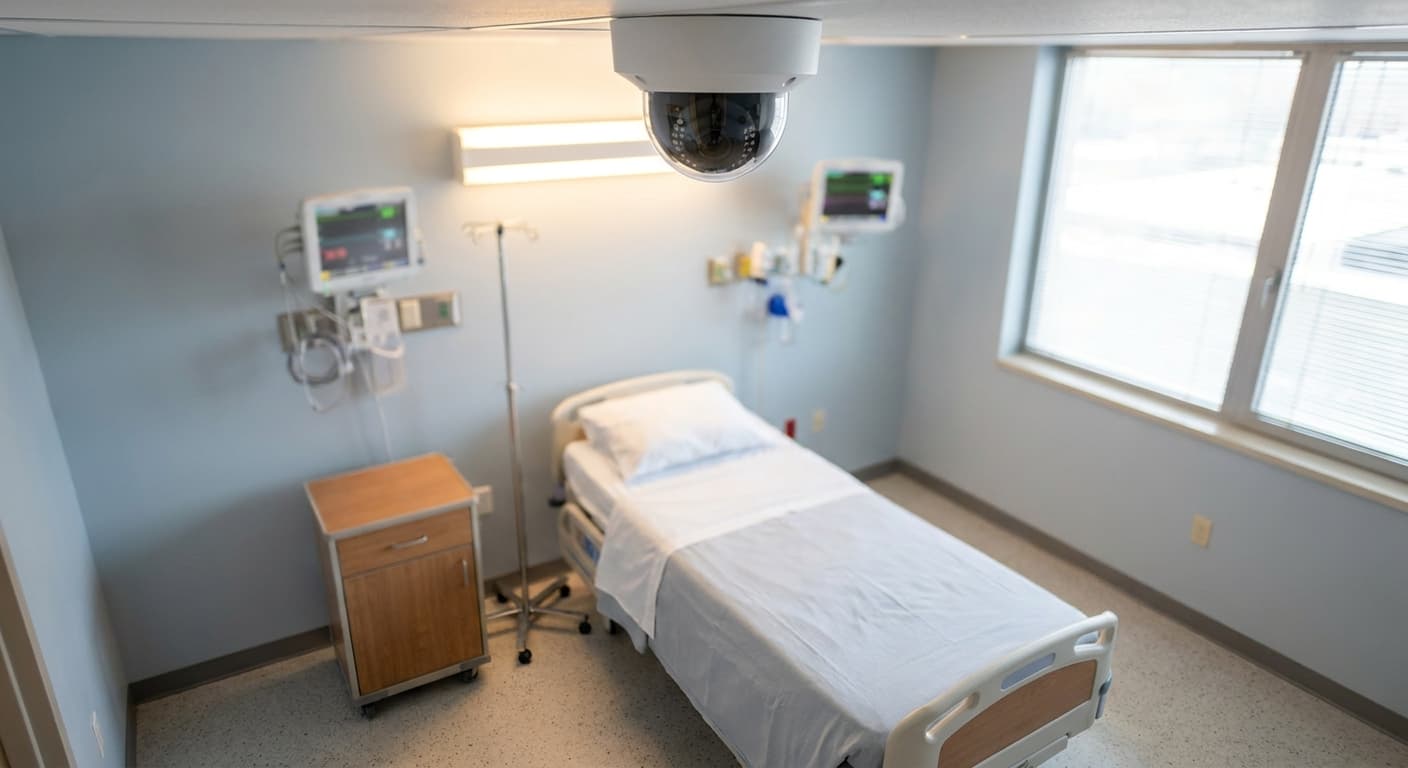
Illustration: AI-generated
Healthcare operations platform LeanTaaS is making a decisive move beyond scheduling dashboards into real-time patient monitoring, acquiring computer vision specialist LookDeep Health to launch iQueue for Virtual Care. The deal, announced November 3, marks the company's second acquisition in approximately two months and signals an ambitious expansion from capacity management into comprehensive hospital operations orchestration.
The acquisition brings peer-reviewed AI technology that uses existing hospital cameras to continuously monitor patient rooms, detecting fall risks, patient movement, and environmental signals that traditional electronic health record systems typically miss or capture too late. Financial terms were not disclosed.
From Retrospective Dashboards to Real-Time Intelligence
LeanTaaS CEO and founder Mohan Giridharadas framed the strategic shift as building "the central nervous system of the hospital," moving the company's iQueue platform from retrospective operational analytics toward continuous awareness and execution across hospital workflows.
The newly launched iQueue for Virtual Care encompasses three service lines: virtual observation for AI-assisted patient monitoring and escalation, virtual nursing for admissions, rounding, education and discharge preparation, and virtual medicine enabling remote physician and specialist connections.
Narinder Singh, former CEO and co-founder of LookDeep, has joined LeanTaaS as senior vice president of ambient intelligence, bringing deployment experience and clinical validation to the integration.
Reported Outcomes and Infrastructure Advantages
According to the announcement, LookDeep deployments have reported clinical outcomes including greater than 70% reduction in fall rates, a doubling of nursing contact time, 80% reduction in medication errors, and threefold cost savings compared to traditional virtual sitting solutions.
A key differentiator is the platform's open architecture approach, which works with existing hospital cameras and in-room devices rather than requiring proprietary hardware installations. This compatibility preserves infrastructure investments and potentially lowers adoption barriers for health systems already equipped with video monitoring capabilities.
LeanTaaS currently serves nearly 200 health systems across more than 1,200 hospitals, centers and clinics throughout the United States, providing an established distribution channel for the ambient intelligence capabilities.
Expansion Roadmap and Competitive Positioning
The company's expansion roadmap prioritizes inpatient flow and operating rooms first, followed by infusion centers and other hospital areas. This follows LeanTaaS' recent acquisition of care transition platform Aidin, creating a dual-pronged strategy to address both patient flow coordination and continuous monitoring.
The combined approach positions LeanTaaS to compete not only with standalone virtual care and patient monitoring vendors, but also with comprehensive EHR-adjacent platforms seeking to own hospital operations management. The company is leveraging what it describes as 15 years of operational knowledge as a competitive advantage in integrating multiple data sources—EHR systems, clinical AI, and ambient sensors—into actionable workflows.
While the technology promises improved safety outcomes through earlier detection of adverse events and extended nursing capacity during persistent staffing constraints, implementation will need to address privacy considerations inherent in continuous video monitoring of patient rooms.
Sources
Companies in this article

Google Search
Follow Health AI Central on Google
Choose Health AI Central as a preferred source, and Google is more likely to show our reporting in Top Stories.
Reporting & accountability
How we maintain accuracy
Health AI Central separates reported facts, analysis, and public-source data. Readers can review our standards, request a correction, or consult the relevant research methodology before relying on a claim.