

Healthcare AI Faces New Uncertainty as China Weighs Restricting Access to Advanced Open-Weight Models
Beijing's policy shift toward \"selective openness\" threatens the global health AI supply chain as Chinese models now dominate open-source downloads despite unaddressed safety vulnerabilities.
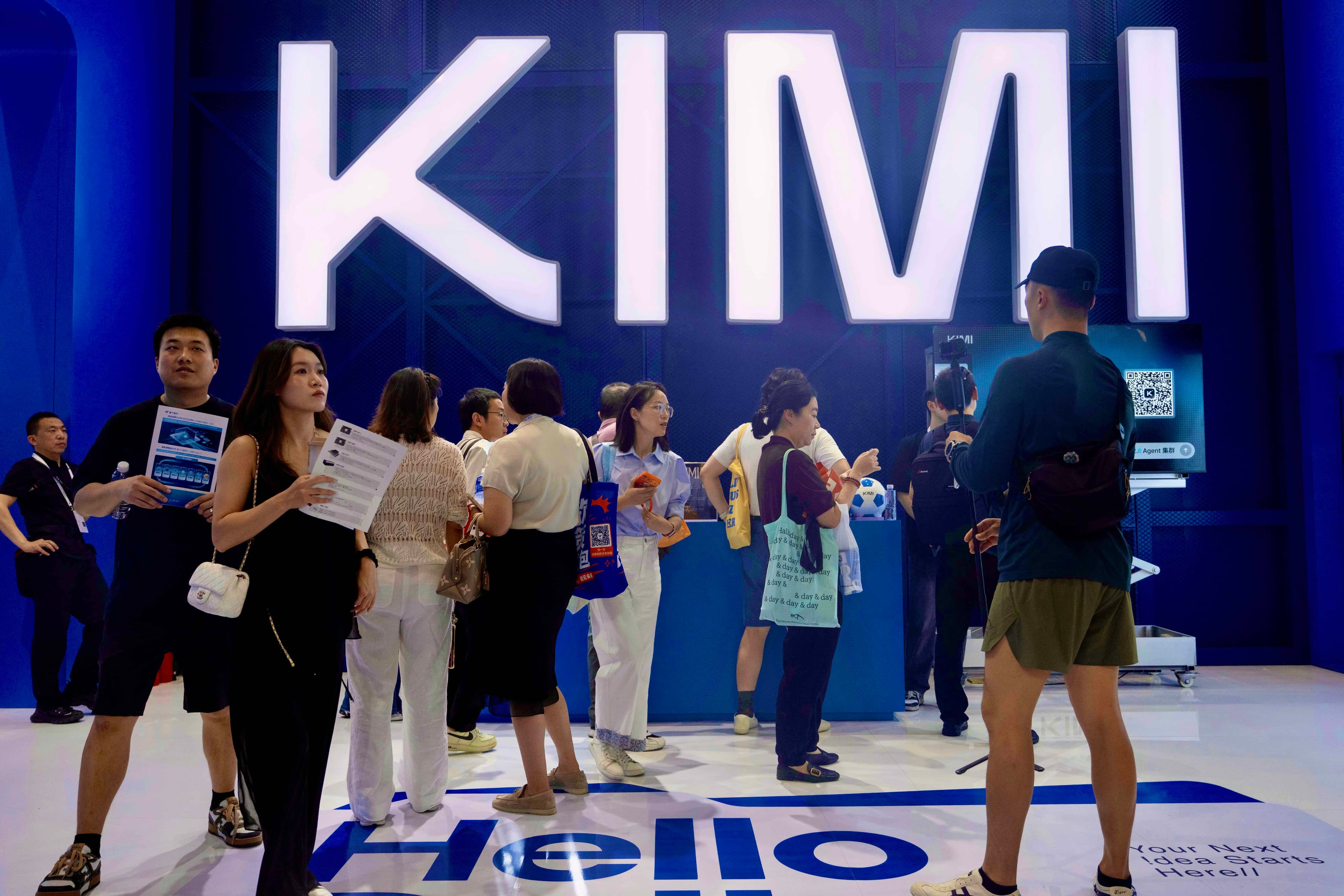
Chinese AI lab Moonshot AI made headlines this month when its Kimi K3 model—a massive 2.8 trillion parameter open-weight system—displaced Anthropic's Claude 3.5 atop a leading coding leaderboard within 24 hours of release. The achievement marked the first time a Chinese model reached this milestone, underscoring the country's rapid ascent in AI development. But for healthcare organizations increasingly relying on Chinese open-weight models for clinical applications, a more consequential development may be unfolding behind the scenes: Beijing appears poised to restrict overseas access to its most advanced AI systems, creating new supply chain risks for global health AI infrastructure.
Beijing's Strategic Pivot on Open AI
According to reporting by The Wire China, China's Commerce Ministry convened executives from Alibaba, ByteDance, and other major AI firms just nine days before President Xi Jinping's recent speech to discuss curbing international access to frontier models. This represents a significant departure from China's longstanding commitment to open-source AI development—a strategy that has proven remarkably successful, with Chinese models now accounting for the plurality of open-model downloads worldwide.
The emerging policy framework appears to favor "selective openness": releasing capable models like Kimi K3 while withholding the most advanced systems. For healthcare AI developers who have built clinical workflows around Chinese foundation models for diagnostic support, medical coding, drug discovery, and clinical documentation, this shift introduces unprecedented uncertainty into technology roadmaps and vendor risk assessments.
Critical Safety Gaps in Open-Weight Clinical Deployments
Beyond access restrictions, healthcare organizations face more immediate concerns about the safety profile of existing Chinese open-weight models. Research from the U.S. Center for AI Standards and Innovation found that DeepSeek's most secure model answered 94% of malicious requests under common jailbreak attacks—compared to just 8% for comparable U.S. reference models. This vulnerability rate raises urgent patient safety questions for any health system deploying these models in clinical environments without additional security hardening.
Perhaps more troubling, no Chinese AI company has published evaluations for chemical, biological, radiological, or nuclear (CBRN) risks—the category most relevant to healthcare applications involving biological weapon design or pandemic pathogen engineering scenarios. While the Chinese AI Safety and Development Association has stated its intention to develop evaluation methods, no formal government institution currently conducts dangerous capability assessments. Princeton University researchers demonstrated the severity of this gap by stripping safety alignment from Meta's Llama 2 using just 10 harmful training examples and seconds of fine-tuning.
Implications for Health System Technology Strategy
The compute efficiency advantage of open-weight models—which shift inference costs from API providers to deployers—remains attractive for resource-constrained health systems. However, the inability to recall released model weights means any safety flaw discovered in a deployed clinical model cannot be centrally patched, unlike API-based services where providers can update backend systems.
Healthcare organizations in sovereignty-conscious markets across the Middle East, Southeast Asia, and Africa may increasingly adopt Chinese open models for local fine-tuning on protected health information, accelerating the emergence of a bifurcated global health AI ecosystem with divergent safety standards. Health tech companies building on Chinese foundation models should immediately develop contingency plans, including comprehensive model evaluation protocols for CBRN risks that Chinese labs have not publicly assessed and alternative vendor strategies should access restrictions materialize.
The Kimi K3 release demonstrates China's technical capabilities in AI development, but the convergence of policy uncertainty and unaddressed safety vulnerabilities demands that healthcare AI builders urgently reassess whether these models meet the risk thresholds appropriate for patient care applications.
Sources
Google Search
Follow Health AI Central on Google
Choose Health AI Central as a preferred source, and Google is more likely to show our reporting in Top Stories.
Reporting & accountability
How we maintain accuracy
Health AI Central separates reported facts, analysis, and public-source data. Readers can review our standards, request a correction, or consult the relevant research methodology before relying on a claim.