

Google's New AI Model Costs 15 Times More Than Rivals—But Is It Worth It for Healthcare?
Gemini 4 Hydrogen delivers faster clinical documentation and stronger reasoning, but the steep price premium forces health systems to recalculate their AI infrastructure economics.
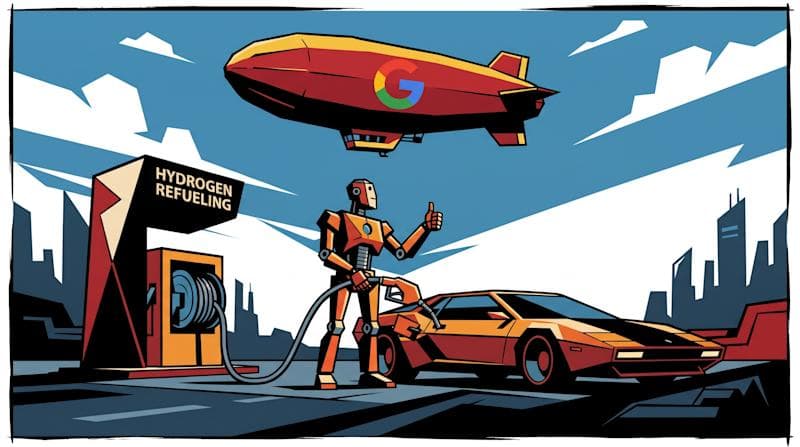
Google has launched Gemini 4 Hydrogen, a mid-tier AI model that promises significantly faster performance and stronger reasoning capabilities than its predecessor—but at a cost that may give healthcare organizations pause. The new model completes tasks 2.5 times faster than Gemini 3.8 Flash and scores 51 on Artificial Analysis's Intelligence Index, up from 31 for Flash at high reasoning settings. However, it carries a price tag 15 times higher than competing models from Anthropic, OpenAI, and Meta at standard rates, according to VentureBeat.
Performance Gains Target Clinical Workflows
Gemini 4 Hydrogen demonstrates particular strength in areas directly relevant to healthcare applications. The model achieves 57% task completion on Terminal-Bench 4.1, a substantial improvement over Flash's 18.2%, though still trailing Claude Sonnet 5.5's 63.9% in Google's comparison. Real-world validation comes from Box AI, which improved from 74% to 79% accuracy on Complex Work Eval while reducing time by less than 50% and using approximately 12% fewer tokens per task, according to Box CEO Aaron Levie.
The model's documented capabilities in table reading and calculations address common healthcare use cases including lab result interpretation, insurance claims processing, and structured data extraction from clinical notes. With a roughly 1 million-token context window accepting text, images, audio, and video, Hydrogen supports the multimodal requirements of modern clinical documentation and diagnostic support tools.
Automatic caching now starts at 4,096 tokens, down from 6,144 on Flash, potentially reducing costs for repetitive healthcare workflows like prior authorization processing or standardized clinical assessments.
The Economics Challenge for Health Systems
The pricing structure presents a significant decision point for healthcare AI infrastructure. Standard rates run $1.50 per million uncached input tokens, $0.075 per million cached input tokens, and $7.50 per million output tokens. Google offers Batch, Flex, and Contributor tiers at 50% of standard rates, but even with these discounts, Hydrogen costs an estimated $1.87 per benchmark task compared to $0.13 for Xiaomi MiMo-V2.6-Flash and $3.68 for Moonshot Kimi K3.1 Pro.
For health systems already using Gemini Flash for ambient documentation, prior authorization, or coding assistance, the migration calculation becomes complex. The accuracy improvement demonstrated by Box—from 74% to 79%—must be weighed against both the cost increase and alternative options like Claude Haiku 5.5 or open-weight models like DeepSeek V4.1 Flash (MIT license, $0.15 input/$0.60 output off-peak) that offer self-hosting options for HIPAA-sensitive workloads.
Google's new Antigravity Orchestrator feature adds another variable, enabling automatic switching between Carbon and Hydrogen models mid-session. This achieved near-Carbon success rates 19% faster with 24% less quota on Terminal-Bench 4.0, potentially optimizing cost-performance tradeoffs for complex clinical workflows.
Strategic Considerations for Healthcare AI Builders
The model is rolling out via Gemini API, AI Studio, Gemini for Business, Gemini app, Google Search, and Google Cloud under the identifier gemini-4-hydrogen. A free tier operates through automatic model selection, while individual access to Antigravity requires Google AI Pro or Ultra subscriptions.
Healthcare organizations should benchmark Hydrogen against their specific clinical workflows—particularly those involving complex document analysis, multi-step reasoning, or agent-based automation—before committing to the premium pricing. The 57% terminal operation success rate suggests potential for more reliable integration with electronic health record systems and clinical decision support tools requiring multi-step API calls, though competing models still lead in some benchmarks.
For high-volume applications like population health analytics or large-scale claims processing, the 15× cost premium may prove prohibitive compared to open-weight alternatives. However, for mission-critical applications where the accuracy differential between 74% and 79% translates to meaningful clinical or financial outcomes, Hydrogen's combination of speed and reasoning capability may justify the investment.
Sources
Google Search
Follow Health AI Central on Google
Choose Health AI Central as a preferred source, and Google is more likely to show our reporting in Top Stories.
Reporting & accountability
How we maintain accuracy
Health AI Central separates reported facts, analysis, and public-source data. Readers can review our standards, request a correction, or consult the relevant research methodology before relying on a claim.