

From Pilot to Platform: How One Health System's $5M AI Win Is Reshaping Hospital Operations Strategy
OhioHealth's decision to expand Qventus AI across its enterprise after saving 13,000 hospital days signals a fundamental shift in how health systems are buying artificial intelligence.
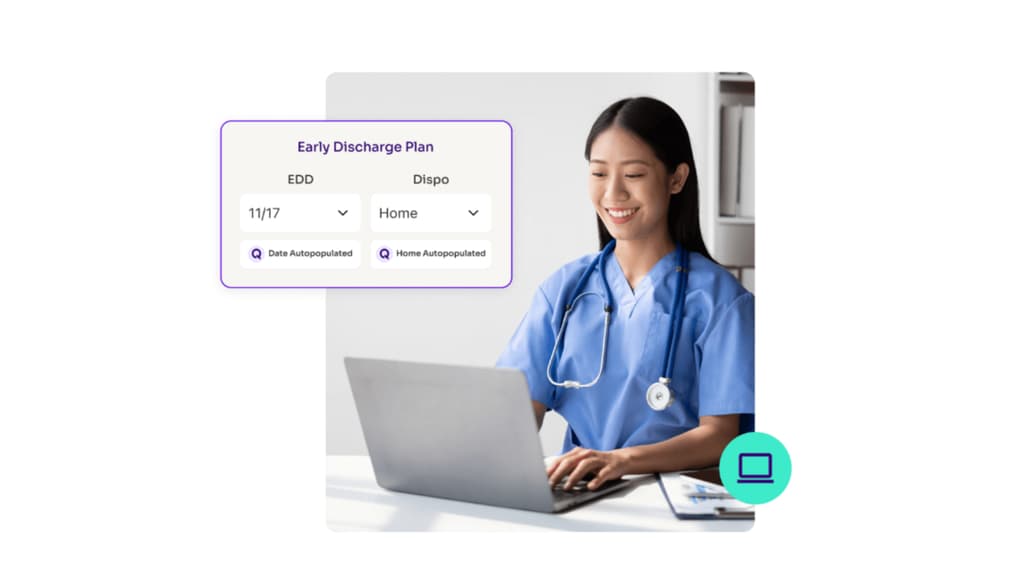
When OhioHealth deployed an AI-powered care operations platform to streamline discharge coordination, the results exceeded expectations: more than 13,000 excess hospital days eliminated, $5.1 million in cost savings, and 2,900 hours of administrative work automated. But the real story isn't the numbers—it's what happened next. Rather than treating the success as a standalone win, OhioHealth made an enterprise-wide bet, expanding the Qventus platform into surgical operations and perioperative care coordination.
The decision reflects a broader transformation in how health systems are approaching artificial intelligence. According to Qventus's 2nd Annual CIO Report surveying over 60 health system leaders, the industry is moving away from experimental point solutions toward comprehensive platforms backed by financial guarantees. The shift comes as health systems confront a stark reality: while 70% rate automated care operations platforms as "very critical" or "mission-critical" for 2026, only 4% have achieved scaled AI implementation with measurable outcomes.
The New Economics of Healthcare AI
The gap between AI enthusiasm and actual deployment has created a market inflection point. According to the Qventus survey, 59% of health systems now require guaranteed ROI or risk-sharing pricing models for AI partnerships—a fundamental change from traditional software licensing. The demand for financial accountability stems from what 53% of respondents cite as their top obstacle: lack of vendor-guaranteed ROI.
OhioHealth's results illustrate why guaranteed outcomes matter. The 13,000-day reduction translates to approximately 35 patient-years returned to community settings, with patients going home an average of one or more days earlier. The platform's three-mechanism value creation—direct cost avoidance, readmission reduction, and recovered coding opportunities—provides multiple financial levers beyond simple efficiency gains.
Other health systems are reporting similar results. HonorHealth saved more than 50,000 excess days and $62 million over three years using the same platform. At Erlanger Health System, the ROI from the Surgical Growth solution was sufficient to justify purchasing additional robotic operating rooms—capital equipment investments exceeding $3 million.
Platform Consolidation Over Point Solutions
The survey data reveals another significant trend: 72% of health system leaders prefer one comprehensive AI partner over multiple point solutions, yet only 11% currently operate with a consolidated vendor model. This 61-percentage-point gap represents what the report characterizes as the "platform opportunity"—health systems want consolidation but haven't found vendors capable of delivering it.
Qventus currently operates across 150+ hospital facilities with modules spanning inpatient capacity management, surgical OR optimization, perioperative care coordination, and a Care Gap and Coding Automation Suite launched in February 2026. The company positions itself as a "system of action" layer atop electronic health records' "system of record."
From Administrative Bottleneck to Patient Impact
The clinical implications extend beyond operational metrics. Automation of administrative bottlenecks—discharge paperwork, lab confirmations, pre-surgical testing outreach—directly reduces unnecessary hospital time. For patients, this means lower hospital-acquired infection risk and reduced readmission rates alongside the obvious benefit of returning home sooner.
Allina Health has taken the partnership model further, becoming the first client in Qventus's AI Solution Factory co-development model, suggesting that some health systems see strategic value in shaping AI tools rather than simply buying them.
As health systems face mounting pressure to improve margins while maintaining quality, OhioHealth's expansion from pilot to platform offers a replicable playbook: start with a high-impact use case, demand guaranteed ROI, measure rigorously, and scale what works. Whether this model establishes a durable middleware category between clinical documentation and operational execution remains to be seen, but the momentum currently belongs to platforms that can prove their value in dollars saved and days returned.
Sources
Companies in this article

Google Search
Follow Health AI Central on Google
Choose Health AI Central as a preferred source, and Google is more likely to show our reporting in Top Stories.
Reporting & accountability
How we maintain accuracy
Health AI Central separates reported facts, analysis, and public-source data. Readers can review our standards, request a correction, or consult the relevant research methodology before relying on a claim.