

Four AI-ECG Applications Have Reached Clinical Readiness—But Most Remain Unproven
A comprehensive review of 77 studies reveals that while STEMI triage, reduced ejection fraction screening, acute MI rule-out, and HCM screening show strong evidence, most AI-powered electrocardiogram tools still lack the prospective validation and patient outcome data needed for real-world deployment.
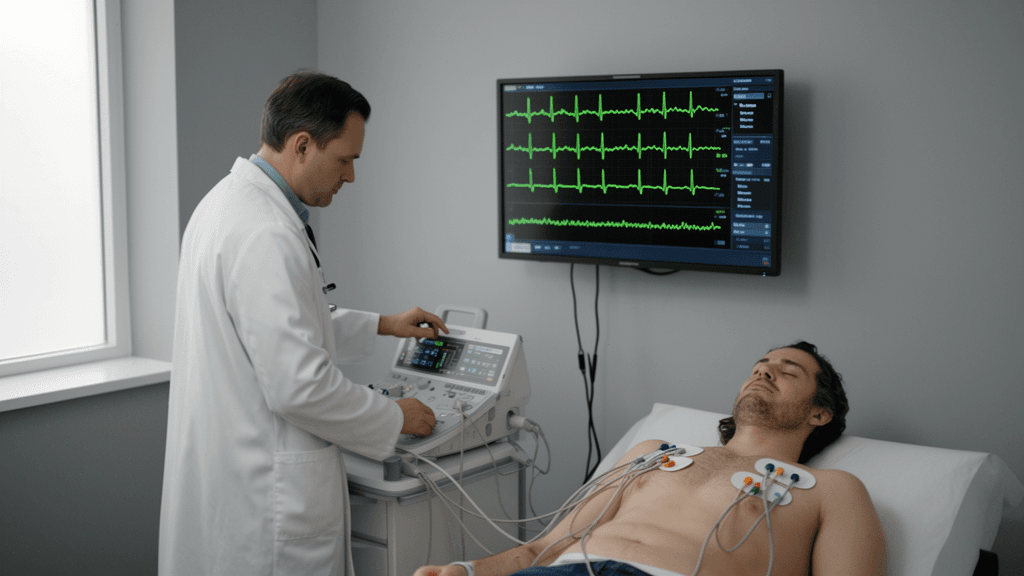
The promise of artificial intelligence reading electrocardiograms has generated enormous excitement in cardiology, with dozens of algorithms claiming superhuman diagnostic accuracy. But a comprehensive review published in Frontiers in Cardiovascular Medicine delivers a sobering reality check: only a small number of AI-ECG applications have progressed from impressive technical performance to strong evidence of clinical utility.
Researchers from the University of Shanghai for Science and Technology and Shanghai Chest Hospital analyzed 77 publications spanning January 2022 through July 2026, evaluating each against five rigorous translational-maturity criteria. Their findings expose a stark gap between what AI-ECG tools can do in controlled studies and what they've actually demonstrated in clinical practice.
The Applications With Strong Evidence
Four AI-ECG applications have achieved substantial clinical readiness with well-defined use cases, reliable reference standards, external validation, clinically actionable outputs, and evidence of workflow integration or patient outcomes.
STEMI triage leads with a randomized trial published in NEJM AI demonstrating 89.5% positive predictive value and 99.9% negative predictive value, while measurably shortening door-to-balloon and ECG-to-balloon times—metrics that directly translate to saved heart muscle and lives.
Reduced ejection fraction screening proved its worth in a randomized controlled trial published in BMC Medicine, where deployment in non-cardiology inpatients increased new diagnoses of reduced left ventricular ejection fraction and raised echocardiography positive predictive value from 20.2% to 34.2%. Notably, it boosted cardiology consultations from 23.5% to 29.3% without increasing overall echo utilization—demonstrating smarter, not just more, testing.
Acute myocardial infarction rule-out has advanced to prospective multicenter diagnostic validation. In the ROMIAE study, a ResNet-based model using only the initial 12-lead ECG achieved an area under the receiver operating characteristic curve of 0.878. At a predefined low-risk threshold, it reached 99.6% sensitivity and 99.1% negative predictive value—performance that could meaningfully support clinical decision-making in emergency settings.
Hypertrophic cardiomyopathy screening has progressed through international external validation and prospective implementation. The approach achieved an AUC of 0.922 across cohorts from Switzerland, the United Kingdom, and South Korea. An FDA-cleared alert system screened 145,848 patients across five health systems, generating 4,348 alerts that led to 17 new HCM diagnoses with a median time from ECG to diagnostic imaging of just 7.5 days.
The Promising But Unproven Majority
The review identified numerous applications stuck in what the authors characterize as the "validation stage"—technically impressive but lacking prospective evidence of clinical impact.
Occlusion myocardial infarction detection tools like ECG-SMART-NET achieved AUC values around 0.95 with angiographic confirmation, addressing a critical gap since conventional ST-elevation criteria show only 43.6% pooled sensitivity for acute coronary occlusion. Yet no prospective catheterization lab activation trials have been conducted to test whether AI-guided decisions actually improve reperfusion without triggering excessive false activations.
Atrial fibrillation prediction models, including a VA study of over 900,000 outpatient ECGs that achieved AUROC 0.93, remain risk-enrichment strategies rather than diagnostic tools. They depend on subsequent clinical AF detection as a validation strategy—raising questions about whether they identify true pre-clinical disease or simply patients destined for near-term diagnosis anyway.
Valvular heart disease detection achieved AUCs of 0.77–0.88 for moderate-to-severe lesions, but positive predictive value remains highly prevalence-dependent, and no prospective workflow studies have demonstrated clinical utility.
Cardiac amyloidosis screening showed promise with a Mayo Clinic model achieving AUC 0.84, but performance dropped substantially in Hispanic patients and in the presence of left ventricular hypertrophy or left bundle branch block—highlighting the transportability challenges that plague many AI-ECG tools.
Heart failure with preserved ejection fraction faces an additional obstacle: the lack of a single definitive reference standard makes the prediction target inherently unstable.
Why High Accuracy Isn't Enough
The review's authors emphasize that impressive AUROC values don't predict real-world performance at deployment thresholds or false-positive rates in low-prevalence populations. They note that multimodal models may derive their advantage from established non-ECG predictors rather than novel electrical signatures, and that transportability across devices and institutions, calibration quality, and label accuracy remain major constraints.
Most critically, the near-universal absence of patient-outcome evidence means that for the vast majority of AI-ECG applications, clinicians have no way to know whether deployment actually improves care or simply generates more alerts, referrals, and testing without corresponding benefit.
The Path Forward
The review's conclusion is measured rather than dismissive. AI-ECG, the authors state, is best positioned as clinician-supervised decision support linked to explicit downstream testing and care pathways—not as an autonomous diagnostician. The applications that have progressed furthest are precisely those in which the model's output connects to an established clinical action: urgent reperfusion for STEMI, echocardiography for reduced ejection fraction, imaging and genetic counseling for suspected hypertrophic cardiomyopathy.
Where that connection is missing, even technically brilliant models remain solutions in search of a clinical problem. The next phase of the field, the authors argue, must shift from retrospective discrimination studies toward prospective, device-diverse, outcome-oriented trials that test whether AI-ECG actually changes what happens to patients—not just what appears on a receiver operating characteristic curve.
The five-criteria translational framework established by this review provides health systems with a practical tool for distinguishing deployment-ready AI-ECG applications from those requiring further validation—and sends a clear message to developers that prospective clinical trials demonstrating real-world impact are now the price of entry for clinical adoption.
Sources
Reporting & accountability
How we maintain accuracy
Health AI Central separates reported facts, analysis, and public-source data. Readers can review our standards, request a correction, or consult the relevant research methodology before relying on a claim.