

Federal Government Launches Standardized Testing Ground for Medical AI Vision Models
NIST's new evaluation platform targets genomics and imaging applications, offering healthcare organizations independent benchmarks for AI procurement decisions.
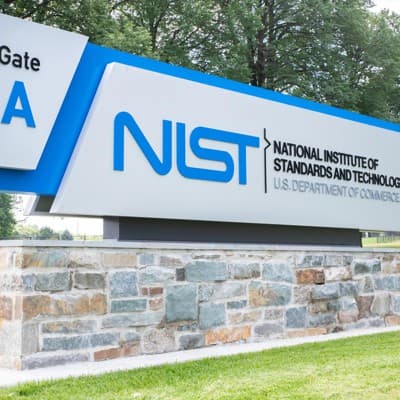
The National Institute of Standards and Technology has opened a federal testing facility designed to benchmark artificial intelligence models against proprietary datasets never before accessible to developers—a move that could reshape how healthcare organizations evaluate and purchase medical AI systems.
The AI Technology Evaluation (AITE) platform, launched this week, provides an isolated environment where AI developers can submit their vision-language models for assessment against exclusive datasets spanning quantum science, genomics, and public safety applications. The first evaluations are scheduled to begin in August 2026.
Healthcare AI Gets Federal Benchmarking Standards
The platform's inclusion of genomics as a foundational evaluation domain signals NIST's recognition of healthcare as a critical frontier for AI standardization. Vision-language models—AI systems that interpret and analyze images while generating text-based insights—have rapidly proliferated in medical imaging, pathology analysis, and genomic variant identification, yet no universal performance standards exist to compare competing systems.
AITE addresses this gap by offering blind testing against datasets that remain inaccessible for training purposes, ensuring that performance metrics reflect genuine model capabilities rather than memorization of publicly available data. For healthcare AI developers working on radiology interpretation, digital pathology, or precision medicine applications, the platform represents an opportunity to demonstrate objective performance in a federally validated environment.
The voluntary program requires submissions from both data providers and model developers, creating a two-sided marketplace where healthcare institutions and research centers can contribute proprietary medical imaging datasets while AI companies submit their models for evaluation.
Implications for Health System Procurement
Healthcare organizations face mounting pressure to integrate AI tools while lacking standardized metrics to compare vendor claims. AITE performance data could provide procurement committees with independent, third-party validation—potentially accelerating adoption decisions and reducing the due diligence burden on resource-constrained health systems.
The platform also aligns with broader regulatory trends. As the FDA develops AI pre-certification pathways and post-market surveillance frameworks, NIST benchmarks could inform regulatory standards for clinical AI performance thresholds. Health systems referencing AITE metrics in vendor evaluations may find smoother regulatory pathways for clinical integration.
The initiative builds on the Commerce Department's May 2026 agreement with Google DeepMind, Microsoft, and xAI through the Center for AI Standards and Innovation, reflecting the administration's preference for voluntary industry collaboration over mandatory regulation.
NIST's core objective extends beyond individual model assessments to establishing universal rubrics for determining state-of-the-art AI performance across domains. For medical AI, this standardization could prove transformative—enabling direct comparisons between competing radiology AI systems or genomic analysis tools that currently market themselves using incompatible performance metrics.
The isolated testbed environment may encourage submissions of proprietary medical AI models by protecting intellectual property while generating performance data. This balance between transparency and confidentiality could prove essential for advancing clinical AI validation without compromising competitive advantages in a rapidly consolidating market.
As healthcare AI moves from experimental deployments to standard-of-care integration, federal benchmarking infrastructure may become as fundamental to medical AI as clinical trials are to pharmaceuticals—establishing the evidentiary foundation that payers, regulators, and clinicians demand before widespread adoption.
Sources
Reporting & accountability
How we maintain accuracy
Health AI Central separates reported facts, analysis, and public-source data. Readers can review our standards, request a correction, or consult the relevant research methodology before relying on a claim.