

FDA Opens Door to Remote and Autonomous Surgery as Regulatory Framework Takes Shape
The agency is seeking public input on telesurgery and AI-driven robotic devices that could transform surgical care, though no such systems have yet received U.S. marketing authorization.
The future of surgery may involve robots operating independently or surgeons performing procedures from thousands of miles away—but first, the FDA needs to figure out how to regulate it. The agency released a discussion paper late last week requesting public feedback on robotic medical devices with autonomous or remote teleoperation capabilities, marking a significant step toward establishing a regulatory framework for technologies that remain largely unauthorized in the United States.
Despite growing international adoption of telesurgery and rapid advances in autonomous surgical systems, no remotely teleoperated or fully autonomous robotic devices have received FDA marketing authorization as of July 2024. The agency's call for comments, due January 5, 2025, signals recognition that current regulatory pathways may need adaptation as artificial intelligence, machine learning, and connectivity reshape what's possible in the operating room.
The Current State of Telesurgery
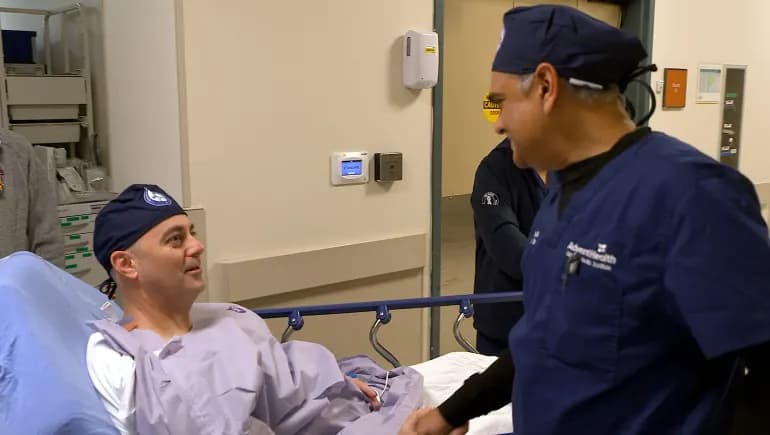
While telesurgery remains investigational in the U.S., pioneering procedures are already demonstrating its potential. Dr. Vipul Patel, founder and medical director of the Global Robotics Institute at AdventHealth Celebration in Florida, performed a robotic prostatectomy in October 2024 under an investigational device exemption on a patient located 35 miles away. The same surgeon completed a transatlantic prostatectomy in 2023, operating from Florida on a patient in Angola.
Internationally, telesurgery is gaining traction, with procedures increasingly performed in China and India. The technology promises to expand access to specialized surgical expertise in underserved areas and potentially improve procedural accuracy through greater reproducibility. However, the lack of FDA marketing authorization creates uncertainty for clinical adoption timelines in the United States.
Autonomous Capabilities on the Horizon
Beyond remote surgery, autonomous robotic systems are under development for a range of clinical applications. These include devices capable of performing blood draws without phlebotomists, finding and stopping life-threatening internal bleeding, and enabling technicians to conduct remote ultrasound examinations. Current robotic devices already encompass stereotactic navigation systems, imaging devices, and endoluminal navigation devices.
The expansion of robotic capabilities is driven by advances in AI, machine learning, connectivity, processing power, data storage, and computational efficiency. Yet these same technological drivers introduce new regulatory challenges, including concerns about autonomous execution errors, reduced user vigilance when systems operate independently, and limitations in system adaptability to unexpected clinical scenarios.
Shaping the Regulatory Path Forward
The FDA has scheduled a public workshop for December 2-3, 2024, to discuss topics outlined in the discussion paper. The agency is seeking feedback on technical considerations, risk mitigation strategies, and policy development approaches that balance innovation with patient safety.
For medical robotics developers, the comment period represents a critical opportunity to shape future regulatory requirements. Healthcare providers, meanwhile, must continue navigating investigational device exemption pathways until the FDA establishes clear frameworks for these emerging technologies.
As autonomous and teleoperated robotic systems promise to improve access to specialized procedures and enhance clinical outcomes through greater procedural consistency, the regulatory groundwork being laid now will determine how quickly—and safely—these innovations reach American patients.
Sources
Google Search
Follow Health AI Central on Google
Choose Health AI Central as a preferred source, and Google is more likely to show our reporting in Top Stories.
Reporting & accountability
How we maintain accuracy
Health AI Central separates reported facts, analysis, and public-source data. Readers can review our standards, request a correction, or consult the relevant research methodology before relying on a claim.