

FDA Greenlights First AI to Forecast Breast Cancer Years in Advance from Routine Mammograms
DeepHealth's Mammo Risk software predicts three- to five-year cancer risk from existing 3D mammograms without additional scans, though reimbursement remains uncertain.
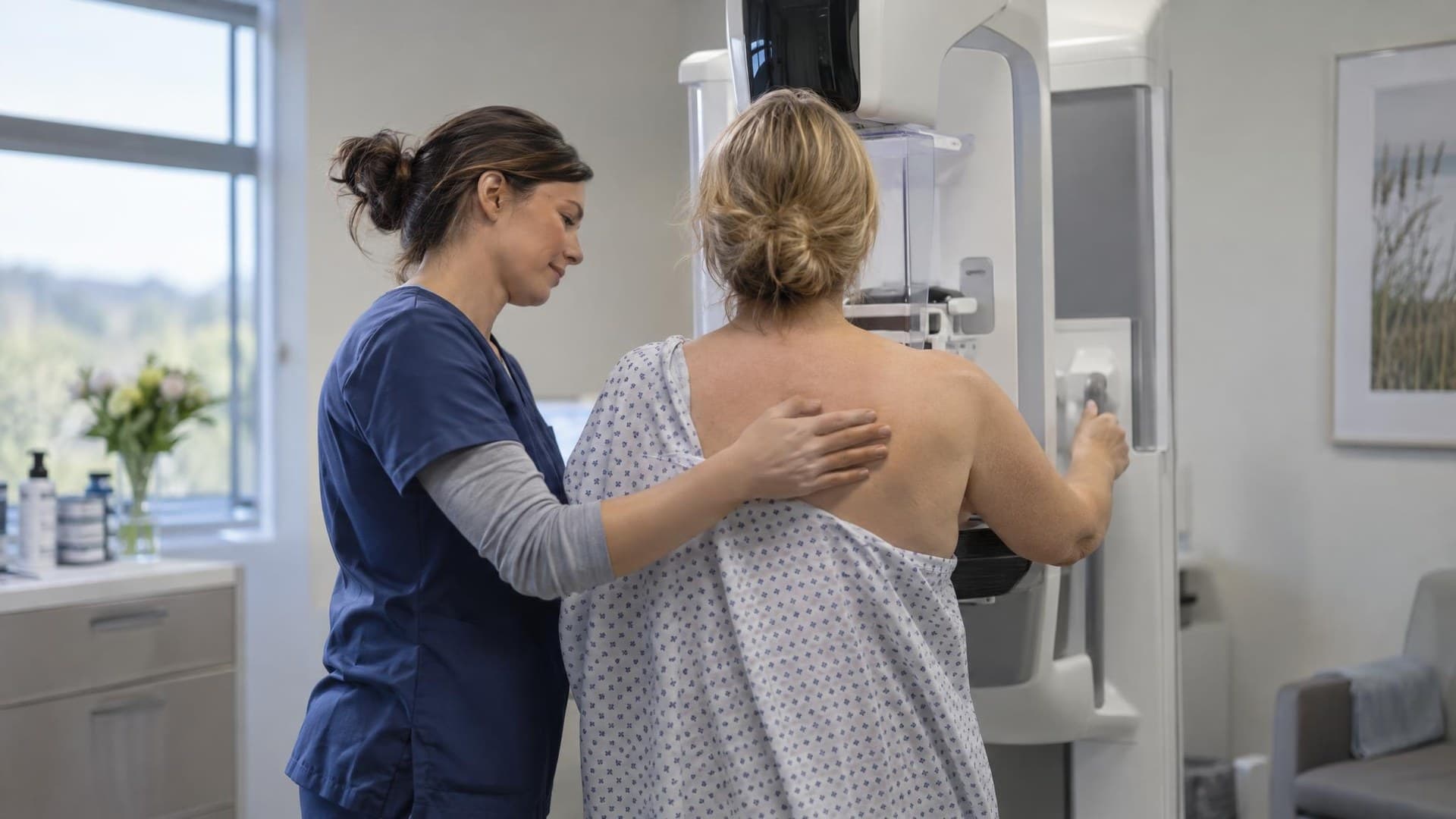
The U.S. Food and Drug Administration cleared DeepHealth's Mammo Risk AI software on November 23, 2026, marking the first FDA authorization for an image-based tool that predicts breast cancer risk three to five years into the future using standard 3D mammography. The 510(k) clearance positions the RadNet subsidiary to deploy risk stratification across routine screening workflows without requiring additional imaging appointments or radiation exposure, though new tracking codes do not guarantee insurance coverage.
Pivotal Study Demonstrates Performance Across Diverse Populations
DeepHealth's clearance followed a pivotal study analyzing more than 65,000 screening mammograms across 10 U.S. clinical sites. The company trained Mammo Risk on 220,000 mammography studies and reports consistent performance in Black women and women with dense breasts—populations historically underserved by traditional risk models. Specific performance metrics for the cleared product were not disclosed in the announcement.
The technology builds on an earlier DeepHealth model that received CE marking in Europe for predicting risk up to two years ahead. A 2022 validation study published in Science Translational Medicine by researchers at Karolinska Institutet examined that predecessor model in 154,200 multiethnic women aged 35–74, identifying 805 incident cancers among 5,173 matched controls. The research model achieved one-year discrimination of 0.82 (95% CI: 0.79–0.85), with a high-risk threshold capturing 76% of stage II–III cancers and 59% of stage 0 cancers in 14% of women. Those metrics apply to the earlier research version, not the newly cleared Mammo Risk product.
Reimbursement Landscape Remains Uncertain
The American Medical Association established two Category III Current Procedural Terminology (CPT) codes effective January 1, 2027, to track Mammo Risk utilization. Code 1137T covers risk scores generated from screening mammograms acquired in a separate session, while 1138T applies when the dataset is acquired in the same session. Category III codes serve as temporary tracking mechanisms and do not establish coverage policies or guarantee payer reimbursement, leaving the financial viability of widespread adoption unclear.
RadNet plans to integrate Mammo Risk into its Enhanced Breast Cancer Detection program, joining the company's existing Mammo Dx cancer detection tool in DeepHealth's Radiology AI Suite. As a wholly owned RadNet subsidiary, DeepHealth can deploy across the parent company's imaging network, providing a controlled environment for real-world evidence generation. Commercial success beyond RadNet's footprint will depend on multi-vendor compatibility and whether payers establish reimbursement after the January tracking period begins.
Personalized Screening Gains Momentum
Victoria Smart, Senior Vice President of Mission at Susan G. Komen, emphasized the shift away from "one-size-fits-all" screening approaches in a statement accompanying the clearance. The technology enables risk stratification directly from routine 3D mammograms without extensive questionnaires or additional appointments, potentially informing decisions about screening intervals and supplemental imaging such as MRI or ultrasound for women at elevated future risk despite negative current exams.
The clinical utility of three- to five-year risk predictions depends on whether elevated scores lead to evidence-based interventions and how the prediction horizon aligns with existing screening guidelines. For patients, individualized future-risk estimates may support more informed screening decisions, though out-of-pocket costs remain uncertain given the absence of guaranteed insurance coverage under Category III codes.
Sources
Companies in this article
 DeepHealthSomerville, MA, USA · Founded 2013DeepHealth is a global leader in AI-powered health informatics for radiology, offering enterprise imaging solutions, population health screening programs, and clinical AI across multiple modalities. The company serves healthcare institutions worldwide with its cloud-native DeepHealth OS platform.View company profile →RadNetLos Angeles, CA, USARadNet provides FDA-cleared AI software for medical imaging, including breast ultrasound interpretation and cancer screening.View company profile →
Follow Health AI Central
Keep up with health AI where you already read
On LinkedIn
The day’s strongest health AI stories in your feed, one or two each weekday.
On Google
Choose Health AI Central as a preferred source, and Google is more likely to show our reporting in Top Stories.
Reporting & accountability
How we maintain accuracy
Health AI Central separates reported facts, analysis, and public-source data. Readers can review our standards, request a correction, or consult the relevant research methodology before relying on a claim.