

AI Tool Cuts Cancer Metastasis Reading Time in Half While Boosting Pathologist Accuracy to 91.5%
Korean medical AI company Deepnoid's cytopathology assistant improved detection sensitivity by 26 percentage points in multi-center study of peritoneal metastasis diagnosis.
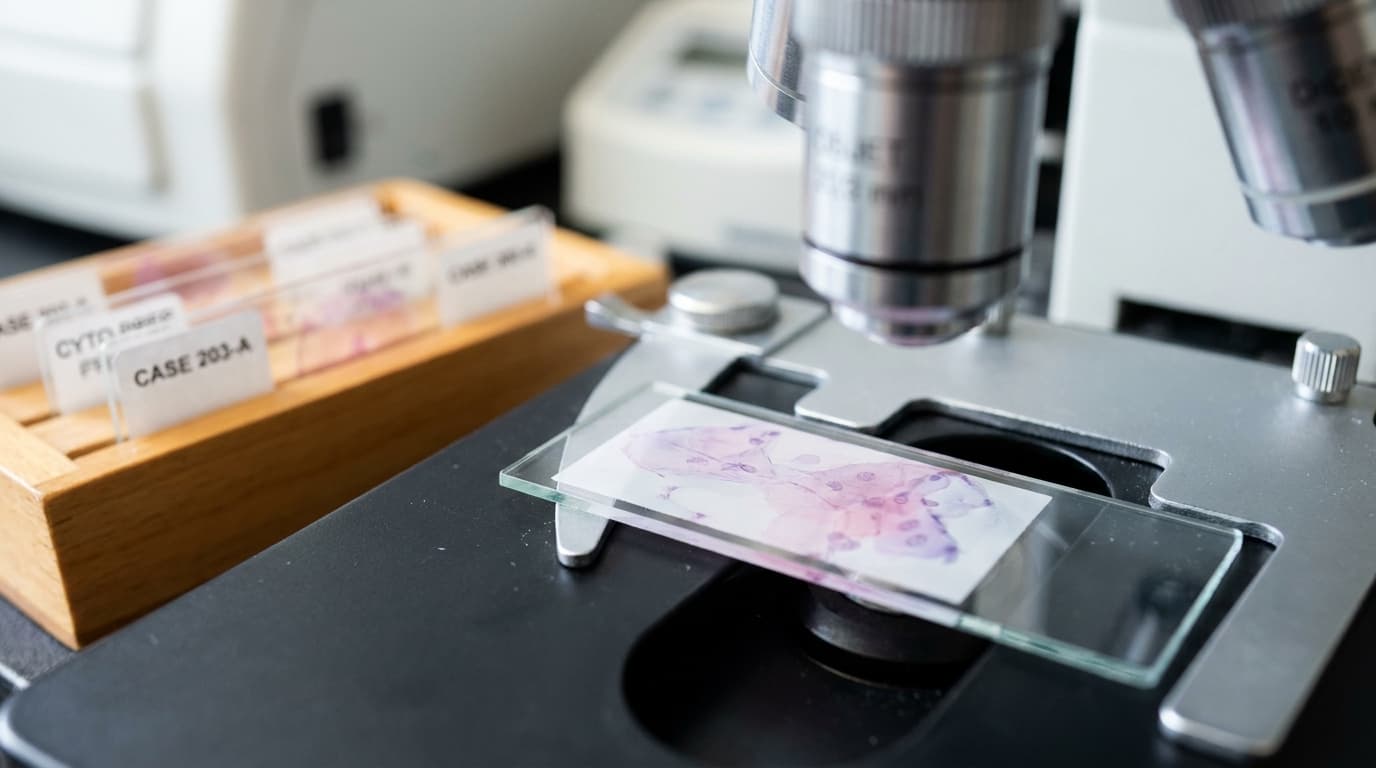
Illustration: AI-generated
Medical AI company Deepnoid has published research demonstrating that artificial intelligence can significantly enhance pathologists' ability to detect cancer metastasis in fluid samples while dramatically reducing analysis time. The study, conducted in collaboration with three major Korean medical centers, showed that AI assistance improved diagnostic accuracy from 76.5% to 91.5% and cut reading time in half.
Addressing a Critical Diagnostic Bottleneck
The research focused on a particularly challenging area of cancer diagnosis: identifying peritoneal metastasis from gastric and colorectal cancers through cytopathology analysis of ascites fluid. This type of examination is notoriously time-intensive and subject to significant variability between pathologists.
Five pathologists participated in the evaluation, which utilized 719 cytopathology slides collected from 214 medical institutions across South Korea. The collaborating institutions included Samsung Medical Center, Asan Medical Center, and Severance Hospital. The AI system works by visually highlighting areas in the samples suspected to contain cancer cells, guiding pathologists' attention to the most clinically relevant regions.
The results were published in the Journal of Korean Medical Science (JKMS), an international peer-reviewed journal.
Dual Performance Gains: Accuracy and Speed
The study revealed improvements across multiple performance metrics. Most notably, sensitivity for detecting positive cancer metastasis cases jumped from 66.2% to 92.6%—a 26.4 percentage point increase that could translate to fewer missed diagnoses in clinical practice.
Average reading time per slide decreased from approximately 100 seconds to 50 seconds, representing a 50% reduction in the time pathologists spent analyzing each sample. This efficiency gain could substantially increase laboratory throughput without requiring additional staffing.
According to Woosik Choi, CEO of Deepnoid, the company is expanding beyond its previous focus on chest and brain imaging AI into the digital pathology space. At the Asian Society of Digital Pathology (ASDP 2025), Deepnoid presented additional research on AI applications for predicting genetic mutations in thyroid cancer and identifying indicators for immuno-oncology drug response.
Implications for Cancer Care Workflow
The combination of improved accuracy and reduced analysis time addresses two critical challenges in modern pathology departments: the need for consistent diagnostic quality and the pressure to process increasing volumes of specimens efficiently.
The 15 percentage point improvement in overall accuracy, coupled with the substantial sensitivity gains, suggests that AI assistance could help reduce false negatives in cancer metastasis detection. For patients with gastric and colorectal cancers, this could mean more reliable staging information and earlier treatment interventions when peritoneal spread is present.
The workflow efficiency improvements may also accelerate turnaround times for diagnostic results, potentially shortening the window between sample collection and clinical decision-making during critical phases of cancer management.
Sources
Follow Health AI Central
Keep up with health AI where you already read
On LinkedIn
The day’s strongest health AI stories in your feed, one or two each weekday.
On Google
Choose Health AI Central as a preferred source, and Google is more likely to show our reporting in Top Stories.
Reporting & accountability
How we maintain accuracy
Health AI Central separates reported facts, analysis, and public-source data. Readers can review our standards, request a correction, or consult the relevant research methodology before relying on a claim.