

AI Reads Anger in Brain Scans to Predict Depression Years Before Symptoms Emerge
A deep-learning model identifies visual cortex abnormalities that forecast individual depression risk up to four years in advance, potentially transforming early intervention strategies.
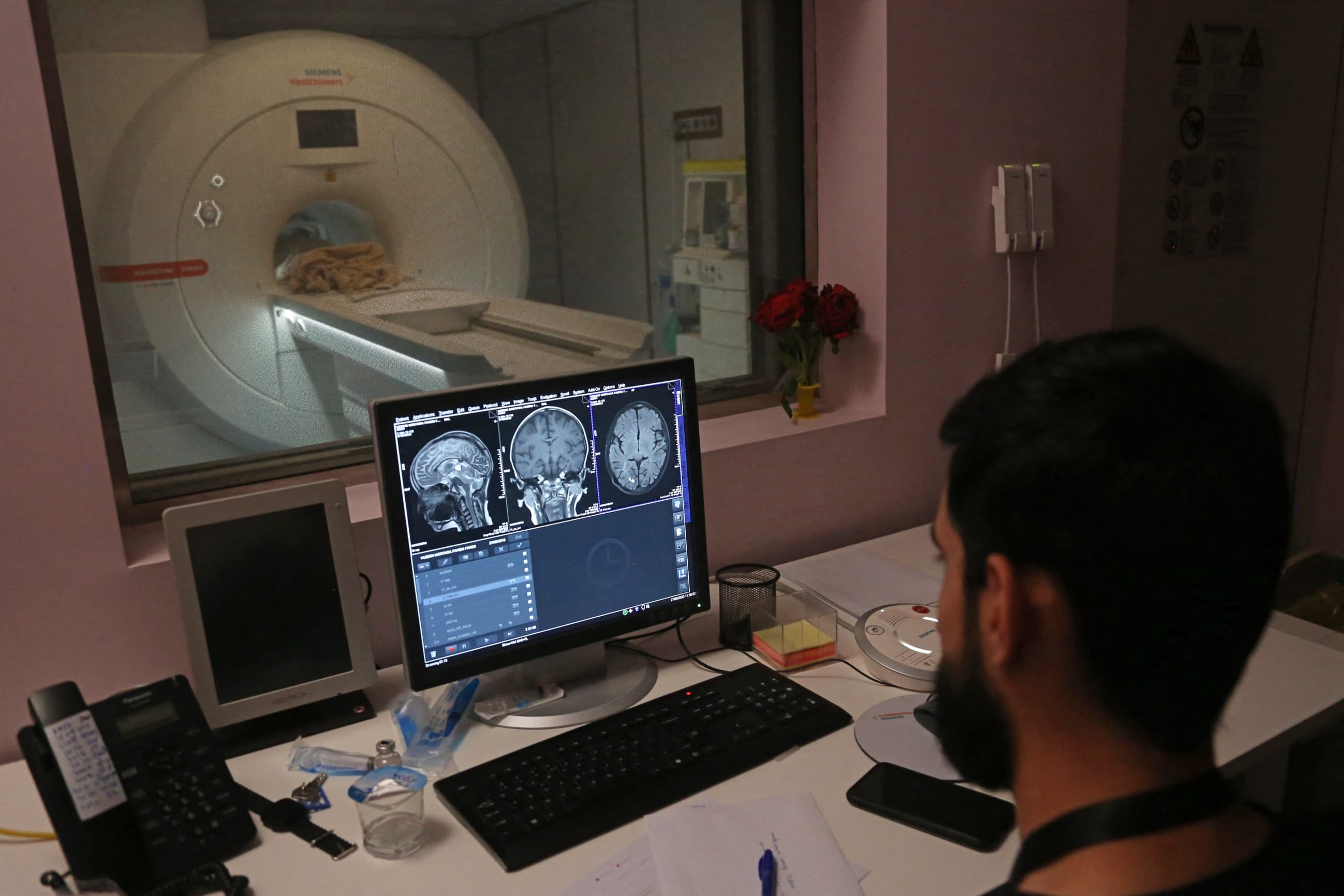
Researchers have developed an artificial intelligence system that can predict who will develop depression up to four years before symptoms appear—by analyzing how their brain processes angry faces. The breakthrough, published in Science Advances on August 16, 2026, marks a significant departure from previous neuroimaging approaches that struggled to achieve clinical utility in psychiatric prediction.
The Shenzhen University team's model focuses on a surprising anatomical target: the visual cortex, a brain region not traditionally associated with depression research. By examining task-based fMRI scans of adolescents viewing emotional faces, the AI identified what researchers call "overregularization"—excessive conceptual smoothing that weakens neural representations of angry expressions. This neurocomputational signature predicted depression onset at age 23 among 725 participants who showed no symptoms at age 19.
A New Approach to an Old Problem
Major Depressive Disorder affects more than 332 million people worldwide, yet current treatment options remain inadequate. Antidepressants produce meaningful responses in only 42–53% of patients, and the landmark STAR*D trial found just a 28% remission rate with first-line citalopram therapy. Early identification of at-risk individuals could enable preventive interventions before disorder onset, but previous neuroimaging biomarkers have failed to deliver.
The ENIGMA MDD consortium analyzed structural MRI data from 45 cohorts across 14 countries and found limited predictive power. A 2026 review of multimodal AI models showed accuracy scores (AUC 0.6–0.7) barely better than chance, with no external validation. The Shenzhen model breaks this pattern by focusing on dynamic emotional processing rather than static brain anatomy.
The dual-pathway deep neural network separates "conceptual" processing—how the brain categorizes emotions abstractly—from raw "perceptual" processing of visual features. In individuals who later developed depression, the conceptual pathway dominated excessively, imposing top-down expectations that distorted actual sensory input when viewing angry faces.
Validation Across Populations and Biology
The model was trained on the IMAGEN longitudinal study, which tracked 1,332 European adolescents with brain scans at ages 16, 19, and 23. The signature was then validated in an independent clinical cohort: 411 patients with established depressive disorder in the STRATIFY study. The neurocomputational pattern also correlated with specific genetic-risk variants for depression and broader polygenic risk scores, suggesting biological validity beyond statistical association.
The visual cortex finding has immediate therapeutic implications. Repetitive transcranial magnetic stimulation (rTMS)—an FDA-approved depression treatment typically applied to the prefrontal cortex—has already demonstrated antidepressant effects when targeting the visual cortex in clinical trials. The new predictive model suggests rTMS protocols may need geographic repositioning to address the mechanistic source of vulnerability.
Limitations and Next Steps
The study's European adolescent cohorts raise questions about generalizability across diverse racial, ethnic, and socioeconomic populations. Task-based fMRI also remains expensive and time-intensive compared to structural scans or clinical questionnaires. However, a 2025 JAMA Health Forum analysis found adolescent depression screening cost-effective at standard thresholds; a validated four-year predictive window could justify more resource-intensive assessment in high-risk groups.
For health AI companies developing psychiatric screening tools, the research establishes a new methodological standard: mechanistic modeling of emotional processing outperforms black-box classification of anatomical features. The challenge now is operationalizing four-year predictive windows in clinical workflows—and determining whether early intervention can actually prevent the 72% treatment non-response rate associated with late-stage diagnosis.
Sources
Reporting & accountability
How we maintain accuracy
Health AI Central separates reported facts, analysis, and public-source data. Readers can review our standards, request a correction, or consult the relevant research methodology before relying on a claim.