

Clinical Trial AI Delivers 82-Fold Return in Tufts Economic Model, But Humans Still Hold the Reins
New analysis quantifies up to $21 million in value from Medable's monitoring agent for phase 3 oncology trials, establishing the first major ROI benchmark as the industry moves from pilot programs to production deployment.
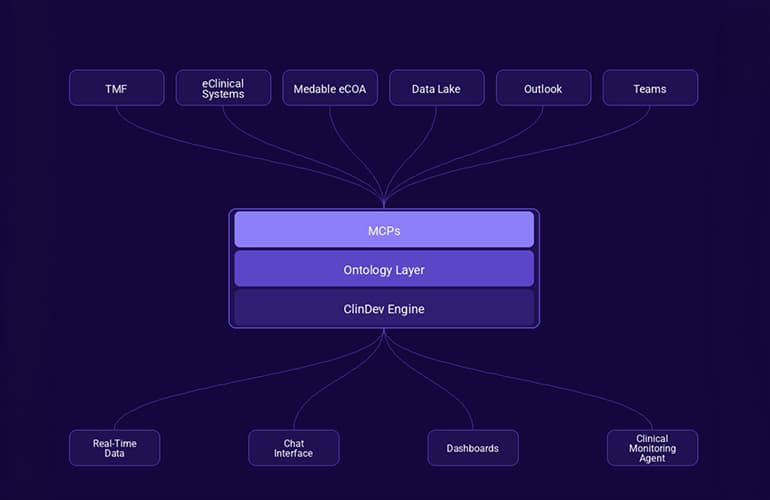
The business case for artificial intelligence in clinical trials just got its first major economic validation. A new analysis from the Tufts Center for the Study of Drug Development estimates that Medable's Clinical Monitoring Agent delivers an 82-fold return on investment for phase 3 oncology trials—translating to approximately $21 million in expected net present value—while phase 2 trials see a 64-fold ROI worth $7.5 million.
The findings arrive as the clinical research industry grapples with exponential data growth and persistent efficiency challenges. Phase 3 protocols now generate an average of 5.9 million data points, up from 929,000 in 2012, according to a Tufts CSDD and TransCelerate analysis of 105 protocols. Meanwhile, oncology drug development continues to face a 95% cumulative failure rate from phase 1 through phase 3, with only 43.4% of phase 3 oncology trials registered between 2007 and 2023 ultimately succeeding.
Automation Meets Reality: What the Agent Actually Does
Medable's AI agent automates clinical trial monitoring by integrating data from approximately 40 systems—including electronic data capture platforms like Medidata Rave and Oracle InForm, trial management systems from Veeva, safety databases like Oracle Argus, and data warehouses including Snowflake and Databricks. The technology identifies protocol deviations, enrollment issues, and adverse event patterns that might otherwise require clinical research associates to manually cross-reference multiple disconnected systems.
But the agent operates primarily in recommend-and-review mode rather than taking autonomous action. Query resolution represents the only near-autonomous function; all other monitoring activities follow a workflow where the AI surfaces insights for human decision-making. Medable's prebuilt agents require approximately 20% customization per sponsor, suggesting a balance between standardization and client-specific needs.
Dr. Pamela Tenaerts, Chief Medical Officer at Medable, and Ken Getz, Executive Director at Tufts CSDD, collaborated on the economic model. The analysis projects that sponsors managing portfolios of 20 active oncology indications could realize up to $226 million in incremental expected net present value, while those with 50 indications might see up to $565 million in modeled scenarios.
The Competitive Landscape and Human Oversight Question
The ROI figures establish a quantitative benchmark in a market where pilot programs have historically lacked hard economic data. A prior 2025 Tufts CSDD analysis of 36 company-reported AI and machine learning use cases showed an average 18% reduction in clinical trial cycle time, but the new Medable-specific model provides sponsor-level financial projections that could accelerate enterprise adoption decisions.
Venu Mallarapu, Chief Transformation and AI Officer at eClinical Solutions—a Medable competitor—confirmed that the market remains at an assistive AI stage, with no customers running fully autonomous agents for clinical trial decisions. This human-in-the-loop reality contrasts with broader industry AI spending patterns: a July McKinsey survey reported that 93% of respondents exceeded their AI budgets, while IBM found that 41% of software developers saved one to two hours daily using agents in late 2025.
What This Means for Trial Stakeholders
For clinical research associates, the technology shifts workload from data wrangling toward interpretation and strategic decisions, though it preserves rather than replaces human judgment. For clinical trial sites, however, accelerated monitoring could create downstream bottlenecks if sites receive increased query volume without corresponding AI support on their end—highlighting the need for system-wide workflow optimization rather than sponsor-side automation alone.
The analysis does not claim that AI agents prevent trial failures, only that they surface issues faster for human decision-making. Whether this speed translates to improved trial success rates, reduced safety events, or faster regulatory approvals remains an open question that the economic model does not address.
Sources
Companies in this article
 MedableMedable is a clinical trial technology platform that uses agentic AI to accelerate clinical development. The company provides eCOA, eConsent, and AI agents that automate trial workflows, reduce manual burden, and enable sponsors, CROs, and research sites to build studies faster and conduct trials more efficiently.View company profile →
 MedidataNew York, NY, USA · Founded 1999Medidata powers smarter clinical trials with unified data, AI-driven insights, and patient-centric technology to accelerate research.View company profile →
Reporting & accountability
How we maintain accuracy
Health AI Central separates reported facts, analysis, and public-source data. Readers can review our standards, request a correction, or consult the relevant research methodology before relying on a claim.