

Claude AI Outperforms Human Scientists in Protein Design Competition, Validating 354 Functional Binders
Anthropic's general-purpose AI achieved hit rates up to 35% in lab-validated protein engineering tests—more than double the industry standard—while analyzing complex chemistry data in minutes instead of days.
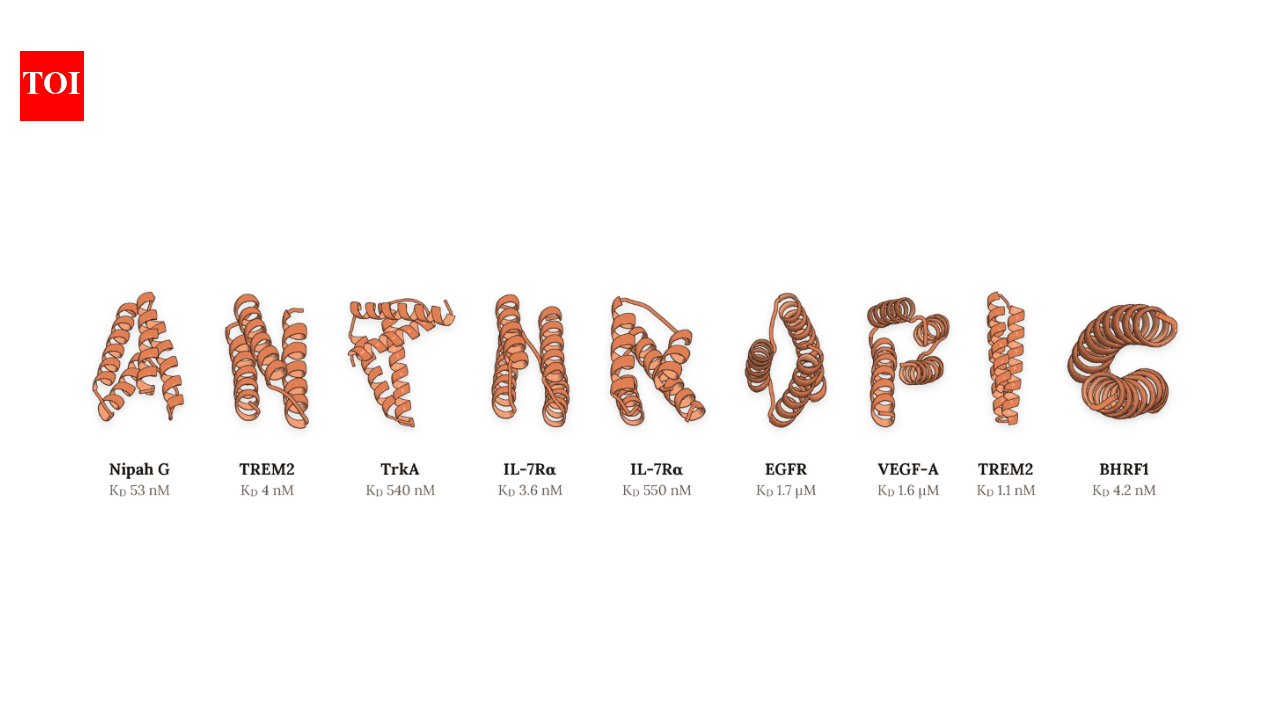
Artificial intelligence has moved from theoretical promise to laboratory-validated performance in drug discovery, with Anthropic reporting that its Claude AI models successfully designed functional protein binders for 14 of 15 test targets with minimal human oversight. Independent labs physically validated 354 working designs from 1,320 total candidates, achieving success rates that significantly exceeded industry benchmarks and, in at least one case, outperformed hundreds of human competitors.
AI Achieves Double the Industry Standard in Protein Engineering
According to Anthropic, Claude's Mythos Preview model achieved hit rates between 26.7% and 35.1% across different testing modes, while the Opus 4.8 model reached 22.6%—all substantially above the field average of 10-15% for protein binder design. The company reports that validation partners Adaptyv Bio and Twist Bioscience confirmed 354 functional binders from the AI-generated designs.
The computational effort required 48 hours of wall time and up to 12,500 NVIDIA H100 GPU hours, with Claude autonomously selecting binding sites, orchestrating open-source design and folding models, running optimization cycles, and screening candidates. Human involvement was reportedly limited to approving access requests, monitoring infrastructure, and ordering final designs for physical testing.
Performance varied dramatically by target. In a competition focused on the RBX1 protein, Anthropic says Mythos Preview achieved a 40% success rate compared to 3.7% for human competitors, with Claude's best design outperforming the winner from 245 human entries. For the TNFα target, Opus 4.8 designed cross-species binders functional across human, cynomolgus monkey, and mouse variants—though Mythos Preview completely failed on this same target for reasons the company did not explain.
Two targets proved particularly challenging: maltose-binding protein yielded zero functional binders from 90 designs, while the synthetic beta-barrel protein BBF-14 produced only three binders with modest affinity.
From Four Days to Twenty Minutes: AI Tackles Analytical Chemistry
In a separate demonstration, Anthropic reports that Claude Opus 5 analyzed raw NMR and LC-MS analytical chemistry data in 19-23 minutes, measuring sample purity at 96.4% compared to a contract laboratory's 96.33% measurement—analysis that took the lab four days to complete. The AI reportedly reverse-engineered a proprietary LC-MS file format and verified accuracy across 2,664 scans, with hydrogen count measurements within 0.08 of laboratory results.
Claude operated with internet access and connectors for Google Drive, Slack, Gmail, and BioRxiv during these tests, according to the company.
Controlled Release Amid Dual-Use Concerns
Anthropic acknowledges dual-use risks associated with protein design capabilities and reports that these functions are blocked in Fable 5, currently its most capable publicly available model. The company says it plans a scientist access program for controlled release of the technology.
The results position general-purpose language models as potential competitors to specialized AI biology companies in the drug discovery space, though clinical translation of AI-designed proteins remains years away and dependent on extensive downstream validation. For pharmaceutical and biotech companies, the demonstrated performance suggests potential compression of early-stage biologics development timelines from months to days, with implications for preclinical costs and therapeutic candidate selection workflows.
Sources
Companies in this article

Reporting & accountability
How we maintain accuracy
Health AI Central separates reported facts, analysis, and public-source data. Readers can review our standards, request a correction, or consult the relevant research methodology before relying on a claim.