

AI Unlocks Hidden Drug Responses in Cancer Cells Without Expensive Single-Cell Testing
EPFL researchers have developed a machine learning framework that reveals which specific tumor cell types respond to drugs using only standard bulk tissue samples, potentially transforming precision oncology.
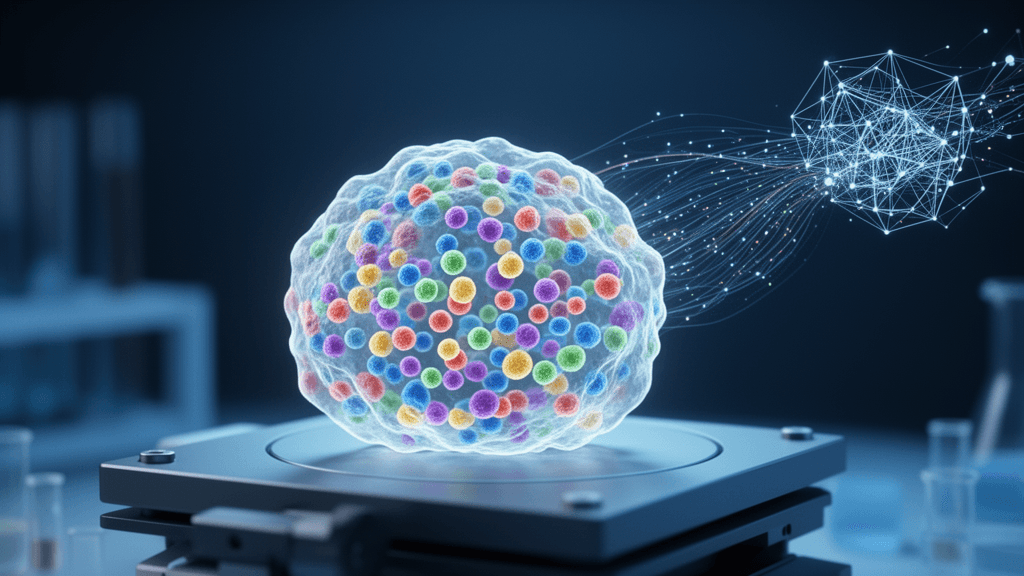
Cancer tumors are notoriously heterogeneous, containing diverse cell populations that respond differently to treatment. Until now, identifying which specific cells within a tumor are vulnerable to particular drugs has required expensive single-cell sequencing and functional assays. Researchers at EPFL have developed a computational solution that extracts single-cell-resolution drug sensitivity information from standard bulk tumor samples—a breakthrough that could unlock hidden insights in existing clinical databases without additional testing costs.
Two Algorithms Solve a Longstanding Challenge
The new framework combines two machine learning algorithms called CLIMB and CLIFF, published in PLOS Computational Biology in October 2024. CLIMB first deconvolves bulk RNA sequencing data into cell-type proportions and expression programs by mapping them to single-cell reference datasets. CLIFF then resolves bulk drug sensitivity measurements into responses specific to individual cell subtypes and even single cells.
According to the research led by Alexandre Coudray, Romain Forey, and colleagues, this approach transfers the cellular resolution from expensive single-cell RNA-seq reference data to abundant bulk RNA-seq datasets already generated in research and clinical settings. The framework was validated across controlled cell line mixtures with known proportions, large-scale analyses spanning two disease contexts and five cancer types, and three independent acute myeloid leukemia (AML) patient cohorts.
The algorithms outperformed existing bulk deconvolution methods even when reference and target samples came from different patients, sequencing platforms, or disease contexts—demonstrating robust generalizability across real-world data variations.
Identifying Stem Cell-Targeting Drugs in Leukemia
The researchers applied their framework to the beatAML cohort, described as the most extensive ex-vivo AML drug screening database, encompassing 121 compounds. CLIMB accurately estimated leukemic stem cell fractions across multiple test datasets and independent patient cohorts—a critical capability since these stem cells are notoriously resistant to conventional therapies and drive disease relapse.
The analysis identified four putative stem-cell-targeting compounds: midostaurin (an FDA-approved multikinase inhibitor), A-674563 (an AKT inhibitor), SNS-032 (a CDK inhibitor), and foretinib (a multikinase inhibitor). This cell-type-specific sensitivity mapping was achieved computationally from existing bulk screening data, without requiring additional single-cell functional assays that would be prohibitively expensive and time-consuming at scale.
Implications for Precision Medicine
For drug developers, the CLIMB-CLIFF framework offers a pathway to transform legacy bulk drug screening databases into cell-type-specific sensitivity maps, potentially accelerating target identification and patient stratification strategies. The ability to computationally pinpoint which cellular subpopulations respond to specific compounds could reduce late-stage clinical trial failures through more precise patient selection and rational combination therapy design.
For precision oncology providers, the method creates opportunities to extract actionable cellular-resolution insights from standard bulk tumor profiling already performed clinically, enabling more granular treatment matching without additional tissue sampling or sequencing costs. The identification of leukemic stem cell-targeting compounds has immediate implications for AML relapse prevention strategies.
Beyond oncology, the researchers note that CLIMB-CLIFF represents a generalizable computational architecture applicable to any bulk functional assay, including CRISPR screens and phenotypic assays, with potential applications in autoimmune disorders and neurodegeneration. This creates opportunities for AI-driven reanalysis of existing clinical datasets and integration with emerging single-cell atlases across disease areas.
Sources
Reporting & accountability
How we maintain accuracy
Health AI Central separates reported facts, analysis, and public-source data. Readers can review our standards, request a correction, or consult the relevant research methodology before relying on a claim.