

AI Slashes Drug Discovery Time by 75% as UAE Lab Unveils Third Cancer Candidate This Year
Insilico Medicine's artificial intelligence platforms have identified novel blood cancer molecules in 12-18 months, a process that traditionally takes up to four years, marking the company's third major therapeutic announcement in six months.
A clinical-stage biotechnology company operating from Abu Dhabi has announced the discovery of a new class of molecules targeting blood cancers, using artificial intelligence to compress drug development timelines and adding to a rapid-fire series of therapeutic candidates unveiled throughout 2024.
Insilico Medicine, which maintains an AI and quantum computing development center at the IRENA headquarters in Masdar City, used its proprietary platforms to identify PROTAC molecules that target Bruton's tyrosine kinase (BTK), a protein involved in the growth and spread of malignant cells in certain leukemias and lymphomas. The discovery, published in the Journal of Medicinal Chemistry, represents the company's third major drug candidate announcement this year, following a brain cancer treatment in April and a non-opioid chronic pain molecule in July.
AI Platforms Cut Years from Discovery Process
The company's dual-platform approach combines PandaOmics, which identifies disease-related target proteins, with Chemistry42, which designs molecules to attach to those targets. According to the company, this AI-driven methodology reduces the timeline for selecting drug candidates from the traditional 2.5-4 years down to 12-18 months—a reduction of approximately 50-60%.
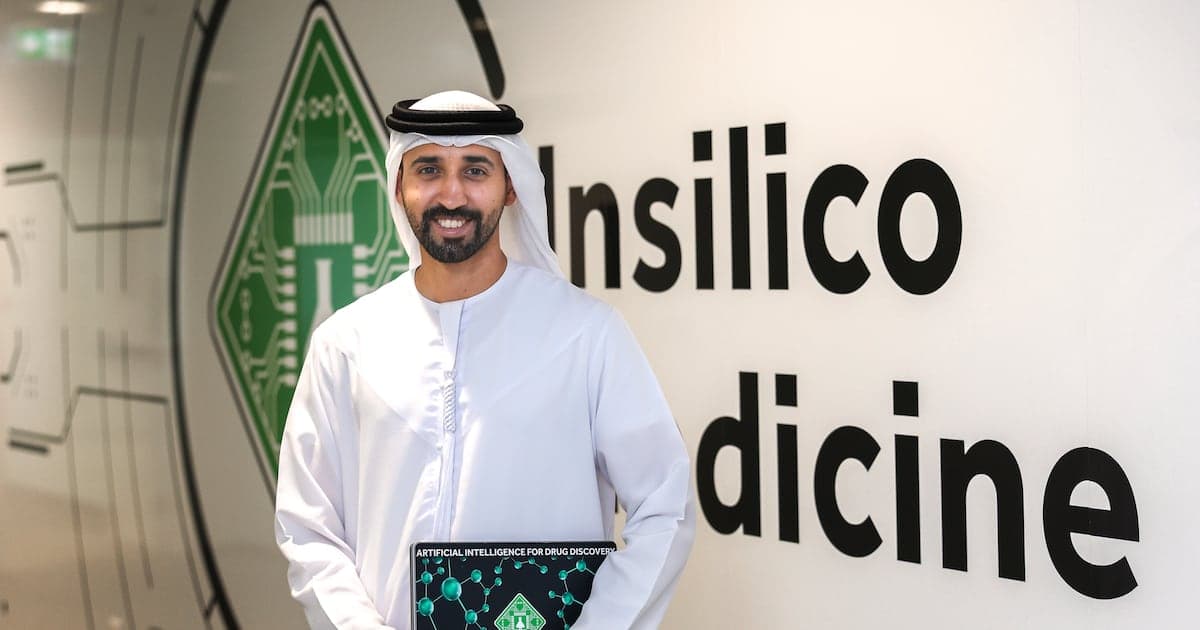
Ahmad Alghaith, an Emirati organic chemist at Insilico Medicine who holds a master's degree from University College London, is among the scientists working on the project. The Abu Dhabi Investment Office supported the creation of Insilico Medicine's UAE operations, positioning the emirate as a growing hub for AI-driven pharmaceutical research.
Novel Approach to Protein Elimination
The discovered compounds belong to a class called PROTACs (proteolysis-targeting chimeras), which function differently from conventional drug inhibitors. Rather than temporarily binding to target proteins, these double-ended molecules drag BTK proteins to the cell's natural disposal systems for complete destruction. This mechanism offers a potentially more durable approach to treating BTK-driven blood cancers compared to existing inhibitors that require continuous presence to maintain effect.
The lead compounds remain in preclinical development, with human testing still several years away pending completion of laboratory studies and regulatory approvals.
Accelerated Pipeline Amid Industry Challenges
Insilico Medicine's three announcements in 2024—spanning brain cancer, chronic pain, and blood cancer—demonstrate an unusually rapid pipeline expansion. The acceleration comes against an industry backdrop where nine out of ten potential drugs that reach human testing ultimately fail to gain regulatory approval.
The company's April announcement of a brain cancer drug candidate marked the first UAE-discovered preclinical candidate, followed by the July unveiling of a non-opioid molecule for chronic pain treatment. The October blood cancer discovery continues this momentum, though all candidates face the lengthy process of preclinical testing, clinical trials, and regulatory review before any potential patient access.
While the discoveries offer no immediate treatment availability, the compressed development timelines and mechanistically distinct approaches represent potential improvements to pharmaceutical R&D economics in an industry seeking to overcome high failure rates.
Sources
Companies in this article

Reporting & accountability
How we maintain accuracy
Health AI Central separates reported facts, analysis, and public-source data. Readers can review our standards, request a correction, or consult the relevant research methodology before relying on a claim.