

AI Navigation System Cuts Lung Biopsy Complications by Nearly Half in Landmark Trial
Generative AI technology reduces pneumothorax rates, radiation exposure, and procedure time in multicenter randomized study of CBCT-guided interventions.
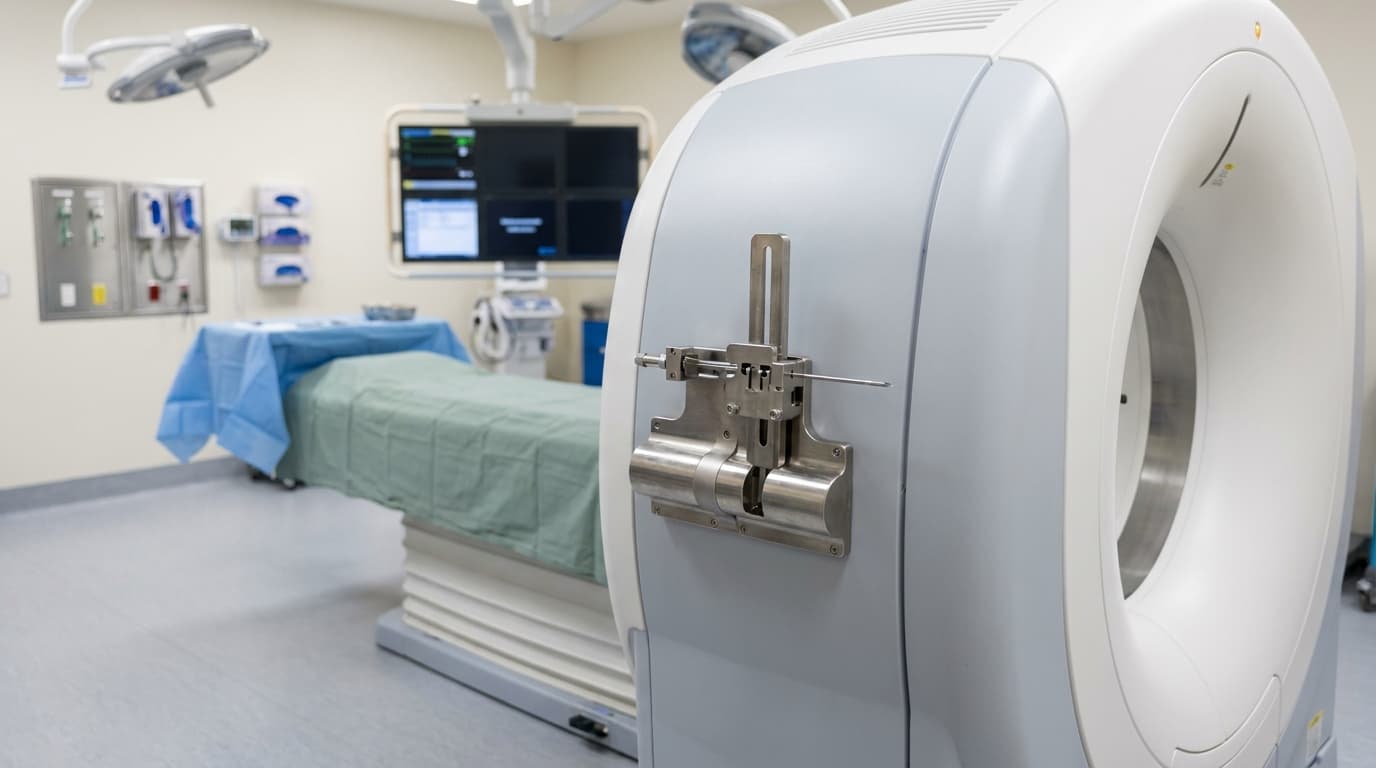
Illustration: AI-generated
A multicenter randomized controlled trial has demonstrated that a generative AI-powered navigation system can significantly reduce complications and improve efficiency in cone beam CT (CBCT)-guided lung biopsies, addressing longstanding technical challenges in interventional radiology.
The GPS-Lung system, tested in a trial registered as NCT06762613, showed measurable improvements across multiple clinical endpoints compared to conventional guidance methods. Most notably, the AI-assisted approach reduced pneumothorax complications—a potentially serious side effect where air leaks into the space between the lung and chest wall—from 23.9% to 12.7%, according to findings published in npj Digital Medicine.
Measurable Gains Across Key Metrics
The trial results revealed consistent advantages for the AI navigation system across several critical performance indicators. Patients in the GPS-Lung group required fewer needle puncture attempts (2.0 ± 1.2 versus 2.5 ± 1.7, P = 0.005), experienced shorter operative times (20.4 ± 5.6 minutes versus 23.2 ± 6.3 minutes, P = 0.001), and were exposed to less radiation (4357.4 ± 3427.3 μGy·m² versus 5570.9 ± 4846.7 μGy·m², P = 0.033).
The system was designed to overcome inherent limitations of CBCT imaging, which often suffers from poor image quality and provides limited surgical guidance intelligence, particularly when targeting small or anatomically complex lung lesions. By leveraging generative AI capabilities, GPS-Lung appears to compensate for these technical shortcomings while providing more precise navigation during procedures.
Clinical and Commercial Context
For interventional radiology departments, the technology offers a standardized workflow that could reduce procedural complexity while improving patient safety profiles. The reduction in pneumothorax rates is particularly significant, as this complication can require additional intervention and extended hospital stays.
The study was supported by multiple grants from the National Natural Science Foundation of China, the Hubei Provincial Natural Science Foundation, and the New Cornerstone Science Foundation, with additional corporate support from Xiaomi Corporation and Kingsoft Corporation. Several authors disclosed financial interests in Neusoft Medical Systems, indicating commercial development pathways for the technology.
Implications for Image-Guided Interventions
The trial's multicenter design and registration in ClinicalTrials.gov (NCT06762613, registered March 26, 2025) lend credibility to the findings and suggest the technology may be approaching clinical readiness. For patients facing lung nodule diagnosis, the results translate to tangible benefits: fewer needle sticks, shorter procedure times, lower radiation doses, and reduced risk of complications.
The success of GPS-Lung may signal broader opportunities for generative AI in image-guided interventions, particularly in procedures where imaging quality has historically limited precision and safety. As the technology moves toward potential commercialization, it could establish new benchmarks for AI-assisted surgical navigation systems across interventional specialties.
Sources
Reporting & accountability
How we maintain accuracy
Health AI Central separates reported facts, analysis, and public-source data. Readers can review our standards, request a correction, or consult the relevant research methodology before relying on a claim.